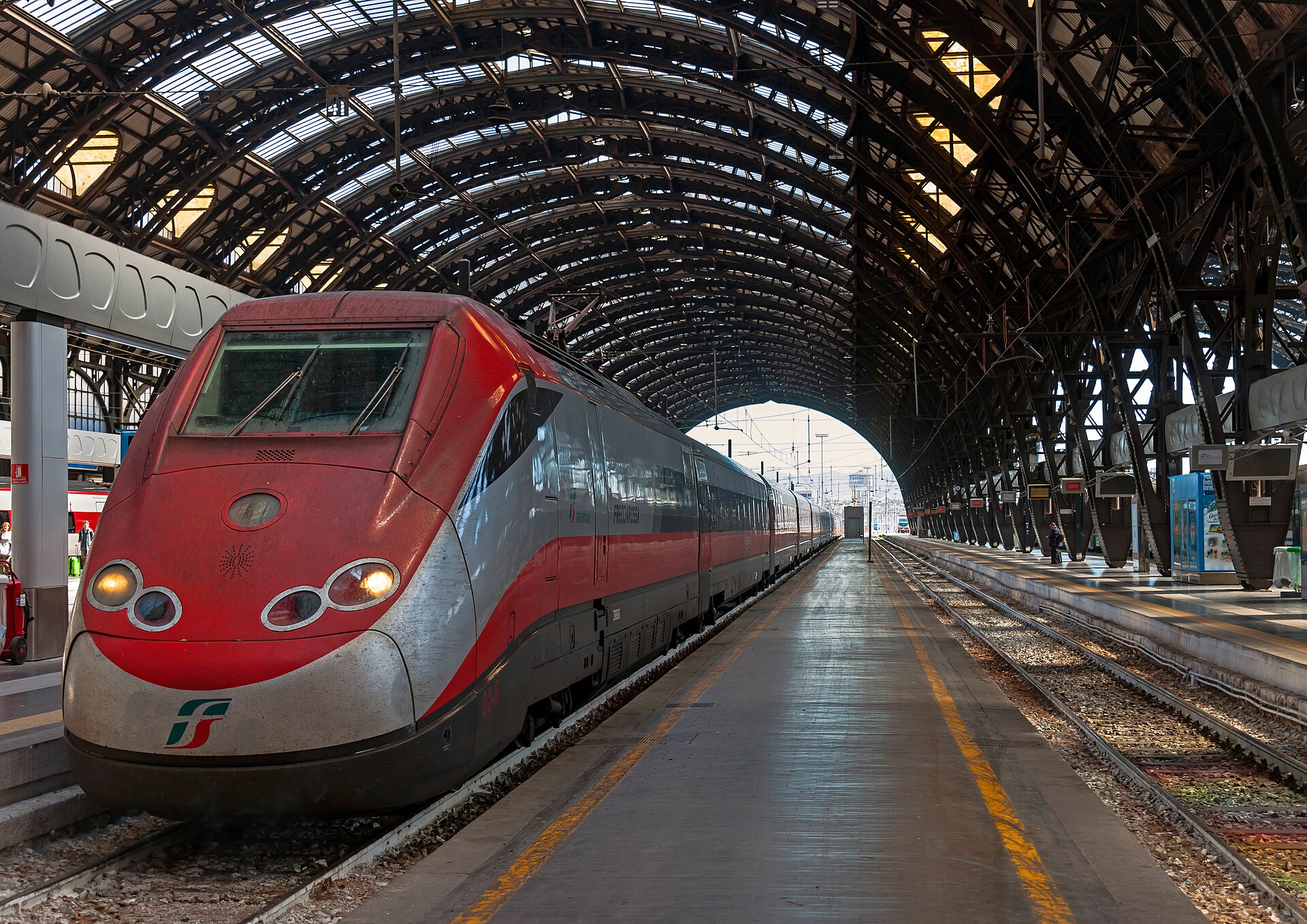
Going between two cities in Europe, people automatically look for a flight, whereas the train often comes out both cheaper and faster. The reason is simple: the station is in the city centre, there is no check-in queue and nobody stops you over the weight of your baggage. Travelling by train is a subject little known to travellers setting out from Azerbaijan and so is often not considered. Below I have written how the system works and what to choose in which case.
When travelling by train beats the plane
The practical measure is this: if the journey is under four hours, the train almost always wins. Paris–London, Madrid–Barcelona, Rome–Florence, Vienna–Prague are routes like that. With a flight, getting to the airport, arriving two hours early and travelling back into the city add three or four hours, while with a train being at the station ten minutes before departure is enough.
The second advantage is the baggage. There is practically no weight limit; you put the suitcase on the rack beside you and no extra charge arises. Flying with a low-cost airline, the baggage fee can double the price of the ticket, so do not forget that calculation.

Ticket types and the logic of the price
On high-speed trains the price works on the same logic as an air ticket: buying early makes it cheap. Tickets usually go on sale three to six months ahead and the lowest fares go in the first days. A ticket bought at the last moment can be two or three times dearer.
| Cheap fare | Not changeable or refundable, bought earliest |
| Flexible fare | Expensive, allows the date to be changed |
| Regional train | The price is fixed, there is no need to buy in advance |
| Night train | Seat, couchette and compartment options |
Regional trains work by an entirely different rule: there the price does not change by the day and the ticket can be bought on the day itself. If you buy a paper ticket in Italy, be sure to validate it in the small machine on the platform, otherwise you are fined. When building the route, comparing train, bus and flight on one screen shows immediately which is the better value.
Read more: Building an itinerary: how many cities, how many days and how to move between them
The Interrail and Eurail pass
A pass is the right to board trains freely on a certain number of days within a certain period. For people living in Europe it is called Interrail, and for citizens of countries outside Europe Eurail, that is, with an Azerbaijani passport you buy the second. The conditions are the same, only the name differs.
A pass does not settle everything and you have to know that in advance. On high-speed and night trains an additional seat reservation is compulsory and has its own fee, which on some routes comes to twenty or thirty euros. A pass pays only if you are planning five or six long journeys in two weeks; on a three-city route an ordinary ticket is cheaper.
Practical rules when travelling by train
Come to the station twenty minutes early, because the platform number is often announced at the last moment. Choosing a hotel near the station removes the morning rush, and looking at hotels around the station on the map is enough. The carriage number is written on the ticket and there are letter markings on the platform; running from the wrong end of a long train is no pleasure. At border crossings keep the passport to hand, as the check is carried out inside the carriage.
If you choose a compartment on a night train, put your bag under the bed and lock the door from the inside. On a long route it does no harm to check the flight price too; sometimes a discounted flight comes out cheaper than the train, and checking the flight options separately takes a few minutes. The rights of rail passengers in Europe are explained on the European Union’s official portal.
In brief
Choose the train on routes under four hours, buy the ticket as early as possible, take a pass only on a route with many journeys. Do not forget to count the reservation fee and to validate a paper ticket in Italy. To build the route and the visa process together, fill in the application form.
Note: train fares and pass conditions vary by country, so check the operator’s current rules before buying.
