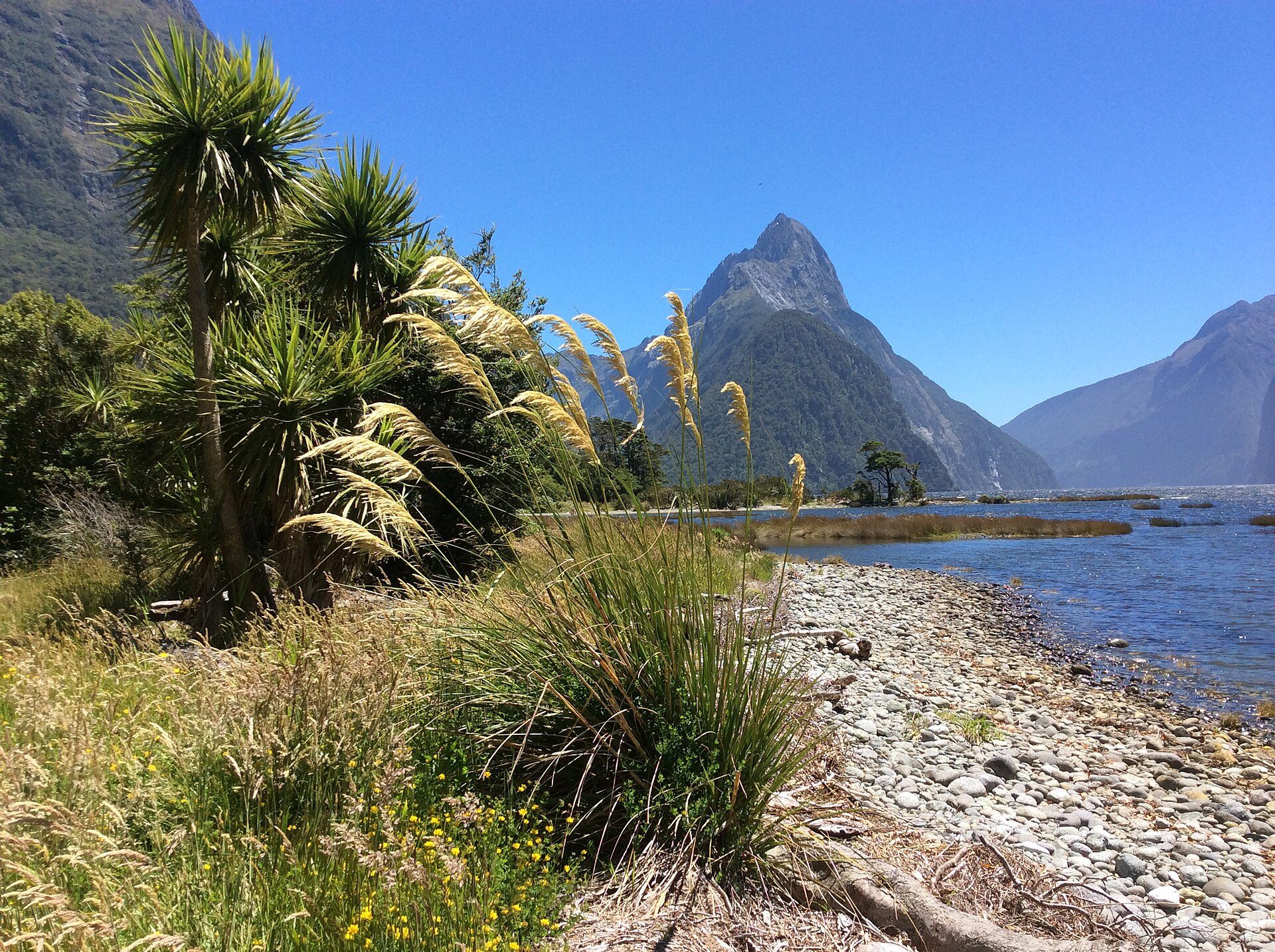
New Zealand is on the other side of the world, and that is exactly why it has stayed untouched. Two islands hold fjords, glaciers, geothermal lakes, the mountains of «The Lord of the Rings» and Queenstown, reckoned the adventure capital of the world.
For us the journey is long and the visa expensive. The NZeTA authorisation does not apply to us; the tourist visa is obtained online. There is a trap too: crossing via Australia requires a separate transit visa, and many people come unstuck on that. Even so, for anyone who goes once, this country gives one of the finest road trips on the planet. Below I have gathered the North and South Islands, the campervan route, transport, food, the season, the visa and transit question, and the budget.
New Zealand in brief
| Capital | Wellington; the largest city is Auckland |
| Language | English and Maori |
| Currency | New Zealand dollar (NZD), 1 US dollar ≈ 1.65 NZD; cards everywhere |
| Visa | Tourist visa online, fee 441 dollars; NZeTA does not apply |
| Best time | December–March summer; March–April autumn; June–August skiing |
| Flights | Direct to Auckland via Doha, 24–26 hours; or via Singapore |
| Daily budget | 200–300 NZD at a mid-range level |
North Island: Auckland, Rotorua, Hobbiton, Tongariro
Auckland is the gateway and they call it the city of sails. The Sky Tower, the ferry to Waiheke island with its vineyards and the Rangitoto volcano fill a day or two.
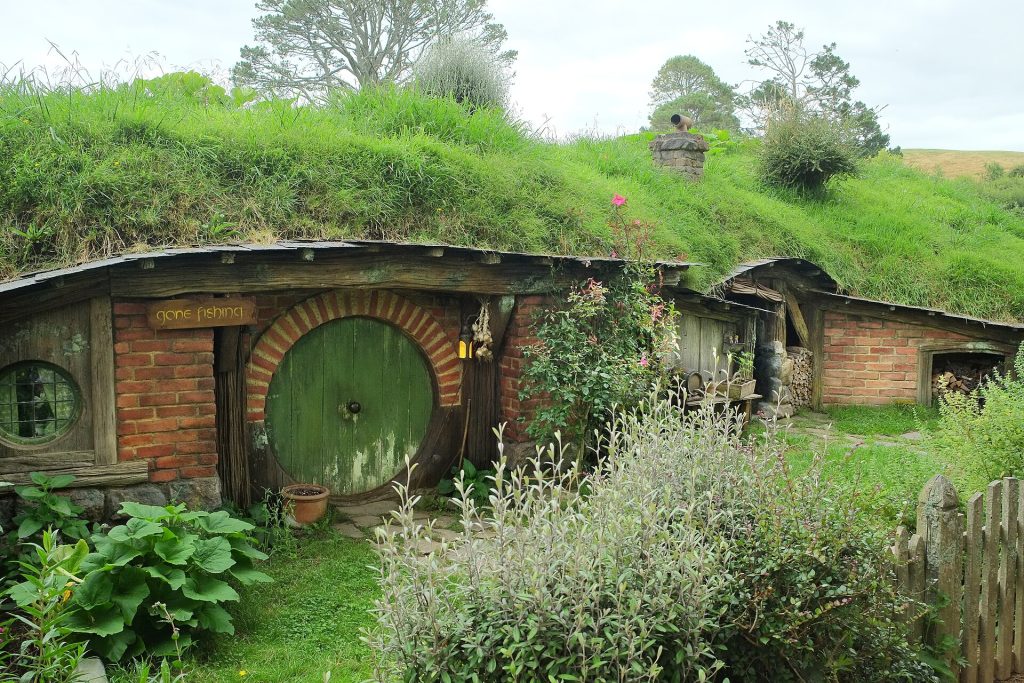
Hobbiton at Matamata is the hobbit village from «The Lord of the Rings», with forty-four hobbit holes and the Green Dragon pub. The ticket is 90 NZD and must be bought in advance; the drive from Auckland takes two and a half hours. In the Waitomo caves you go by boat under a ceiling of glow-worms burning like stars.
Rotorua is the country’s geothermal capital and the smell of sulphur has soaked into the town. Wai-O-Tapu has its Champagne Pool, Te Puia its geysers and mud pools. At a Maori cultural evening they serve hangi, food cooked in an earth oven. Add the Polynesian Spa thermal pools and two days pass comfortably. Lake Taupo and Huka Falls are on the way.
The Tongariro Alpine Crossing is nineteen kilometres and is considered the world’s best one-day hike. The trail runs between volcanoes, including Ngauruhoe, known from the films as Mount Doom.
Wellington is a compact capital; entry to the Te Papa museum is free, and the city has a cable car and the Weta studios. The ferry to the South Island across the Cook Strait takes three and a half hours. Up north, the Bay of Islands with its dolphins and Waitangi is a stop of its own.
South Island: Queenstown, Milford Sound, Tekapo, glaciers
The South Island is the real reason for New Zealand. Queenstown is the adventure capital between Lake Wakatipu and the Remarkables. The world’s first bungee jump was made from the Kawarau bridge. Jet boats, paragliding, the Skyline gondola and the famous Fergburger are here. Nearby are the gold town of Arrowtown and Glenorchy with its Lord of the Rings scenery. Set aside three days. Milford Sound is the fjord in Fiordland. Mitre Peak, the waterfalls and the seals are its main sight. A day tour from Queenstown takes twelve hours; the alternative is to sleep in Te Anau. The boat trip is 100–150 NZD. It is finer in the rain, believe me.
On the South Island the route starts at Lake Wanaka, where the lone tree is the country’s most photographed image and the Roys Peak hike looks down on the same lake. Lake Tekapo’s water is turquoise, the Church of the Good Shepherd stands on its shore, and in the Dark Sky reserve you watch the stars at night. In December the surroundings are covered in lupins. Nearby are the three-thousand-seven-hundred-and-twenty-four-metre Mount Cook and the Hooker Valley walk.
On the west coast people go up to the Franz Josef and Fox glaciers by helicopter, and the Punakaiki pancake rocks are on the way. Christchurch is a city rebuilt after the earthquake; there are dolphins at Akaroa and whales at Kaikoura, while Abel Tasman park is known for its golden beaches and kayak routes. The classic route starts at Christchurch and ends with Tekapo, Queenstown, Milford, Wanaka and Franz Josef, taking ten days.
Campervans, InterCity and New Zealand’s roads
The country is toured by car, and the campervan is the national way of travelling here. A campervan costs 100–250 NZD a day to hire, and a night at a DOC campsite 10–20 NZD. «Freedom camping» is possible only where it is allowed. The rental companies are in Auckland and Christchurch, there is a one-way option, and an ordinary car is 50–90 NZD.
Two things to remember on the road. Traffic is on the left, the roads are narrow and scenic, and distances are deceptive: three hundred kilometres easily takes five hours. An Azerbaijani driving licence is accepted with an English translation.
Touring without a car is possible too. InterCity buses cover the whole country: Auckland to Rotorua is four hours and 40 NZD, Christchurch to Queenstown eight. Domestic flights are run by Air New Zealand and Jetstar: Auckland to Queenstown is two hours and 100–200 NZD, and to Christchurch an hour and a half.
Between the two islands the Interislander ferry links Wellington and Picton in three and a half hours for 70 NZD. The TranzAlpine train runs one of the world’s most scenic routes from Christchurch to Greymouth. In Auckland city transport works with the AT HOP card, and there is Uber too.
Lamb, hangi, pavlova: the New Zealand kitchen
New Zealand lamb is considered the world’s best. Green-lipped mussels, Bluff oysters and salmon caught near Mount Cook are famous too, and in the coastal towns people eat fish and chips. In Rotorua they serve hangi, meat and root vegetables cooked in a Maori earth oven.
For dessert come the pavlova meringue cake and hokey-pokey ice cream. The flat white was invented right here. Kiwifruit and Marlborough wines are on the list too, and there is always a queue outside Fergburger in Queenstown.
Lunch in a café is 20–30 NZD and dinner in a restaurant 40–70. The Countdown and Pak’nSave supermarkets are the backbone of a campervan trip, and tipping is not expected.
Halal food is easy to find in Auckland, which has a large Muslim community with halal kebab and Indian restaurants. There are such places in Christchurch and Wellington too. In the small towns you switch to fish and vegetarian options. The tap water is clean.
Read next: New Zealand visa: NZeTA does not apply, 441 dollars and the Australian transit trap
Season and the transit question
This is the southern hemisphere, so the seasons are reversed. December to February is summer, the temperature holds at 20–28 degrees, and the local holidays fall then too, so campervans and hotels are booked out months ahead.
March and April are the best time of year for me: the weather is settled, the colours turn and the tourists thin out. May and September to November are quiet and cheap too, and the spring lupins flower at Tekapo in November and December. June to August is winter, the ski season opens at Queenstown and Wanaka, the Milford road can close for snow and rain increases in the north. The weather shows four seasons in a day, so dress in layers; the sun here is very strong and sunscreen is essential.
From Baku the most comfortable route is flying to Auckland with Qatar Airways via Doha, one of the world’s longest flights. The alternative is via Singapore. Going through Australia, that is via Sydney or Melbourne, requires an Australian transit visa even just to change planes — watch for that when buying the ticket. Route and season information is on the 100% Pure New Zealand portal.
Budget and tickets
Accommodation is expensive. A three-star hotel is 150–220 NZD in Auckland, 200–350 in Queenstown in summer, 130–200 in Rotorua and 180–300 at Tekapo. A campervan brings the overall cost down because it combines accommodation and transport. A hostel bed is 40–60 NZD, and the hostel network in this country is very wide.
The attractions cost seriously too. Hobbiton is 90 NZD, the Milford boat 130 and Wai-O-Tapu 40. A bungee jump is 300 NZD, the Skyline 60 and a glacier helicopter 400, while the hikes are entirely free. Hobbiton and Milford fill up days ahead in summer, so buy the ticket now.
Excluding the flight, a two-week campervan trip fits into 4000–5500 NZD per person, and the visa adds 441 dollars on top. Qatar Airways flies to Auckland via Doha and Singapore Airlines via Singapore; a ticket to Auckland runs between 1800 and 2500 dollars. Cheap tickets routed through Australia are no use without a transit visa. New Zealand tour packages fitting the North and South Islands into two weeks settle the visa, the campervan or car, the ferry and the Milford trip in one go — and on a route this far away, that really is the easiest path.
Frequently asked questions about New Zealand
How many days does a trip to New Zealand need?
Because of the long journey, fourteen days at least: five for the North Island and eight or nine for the South. Ten days for the South Island alone.
North Island or South Island?
If time is short, choose the South Island, because the fjords, the glaciers, Queenstown and Tekapo are there. The North is for geothermal landscapes, Maori culture and Hobbiton. A ferry or a flight joins the two.
Is a campervan fine with children?
Yes, the country is ideal for family travel; campervans for four to six people and DOC campsites are safe. A child seat is required by law and is taken from the rental company.
In closing
New Zealand is distant, expensive and requires a visa. But it gives you the cleanest and most scenic road trip on the planet. Choose the right transit and the autumn season and it becomes the trip of a lifetime. The visa and transit rules are explained on the New Zealand page, and to build the campervan route together, fill in the application form.
Note: the prices here are as of the publication date and can change with the season.
