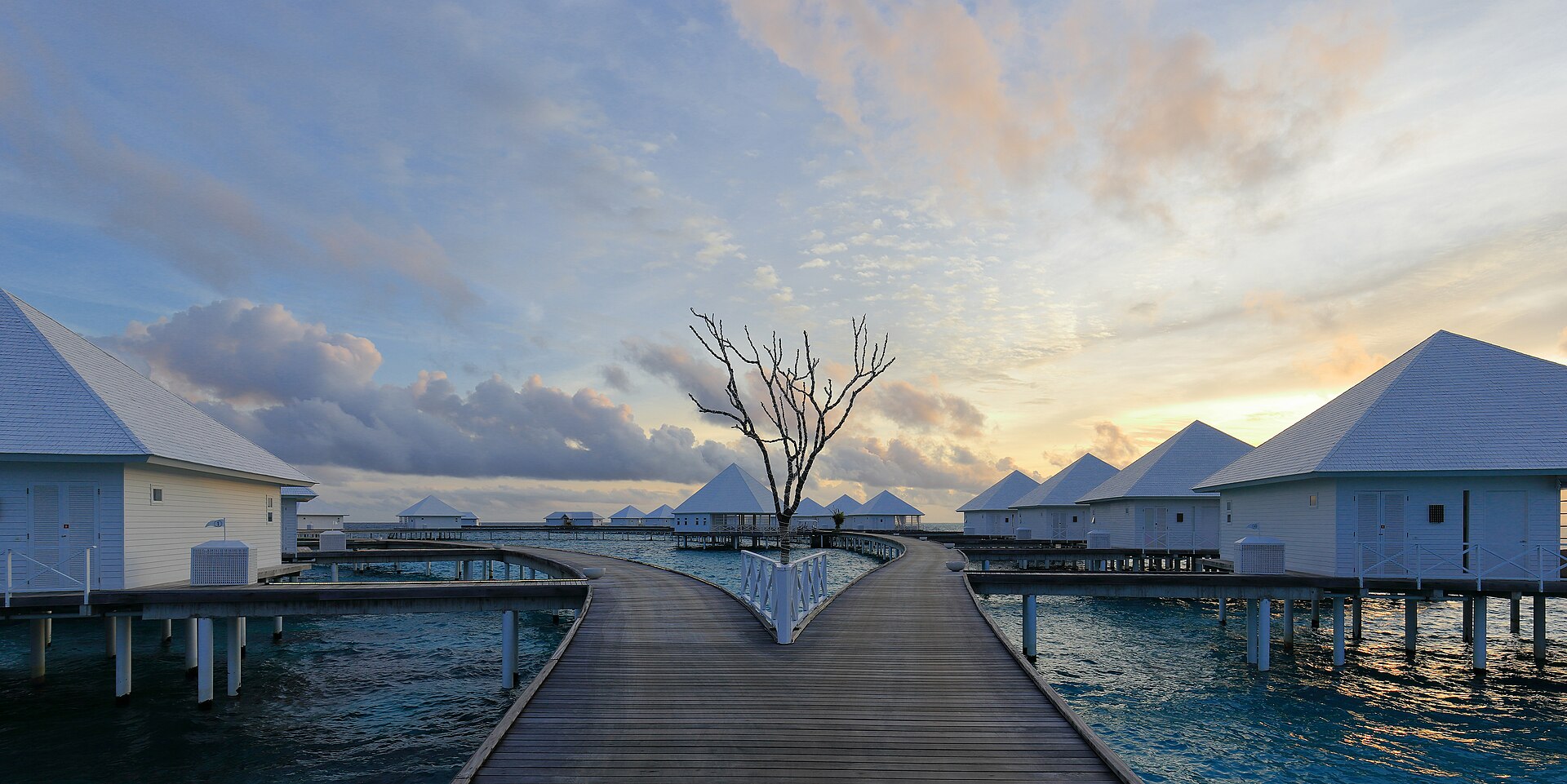
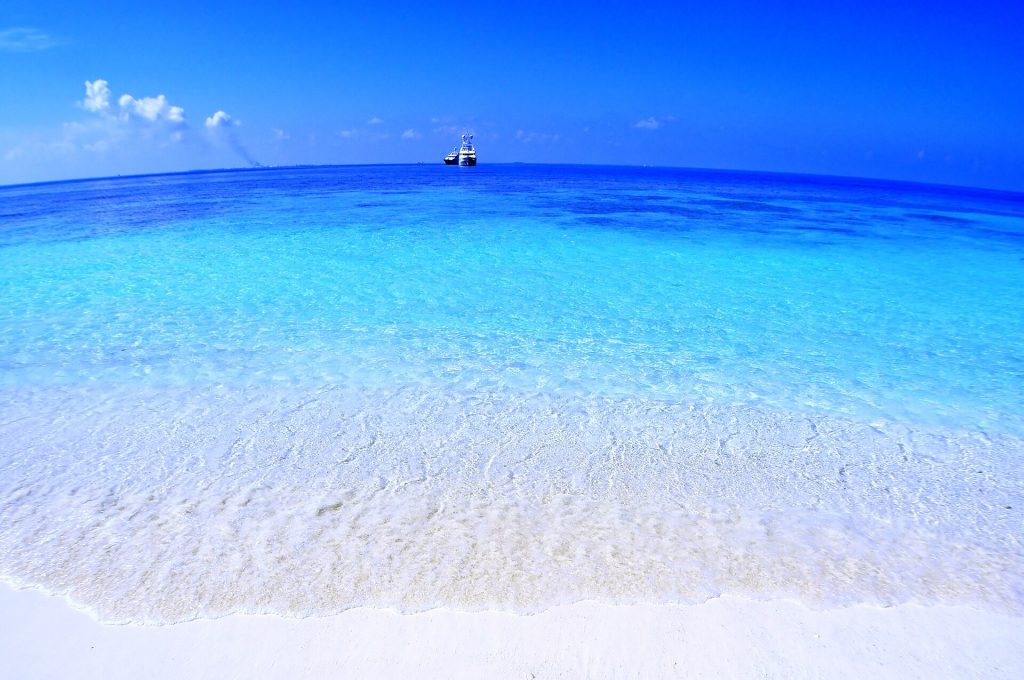
For us the Maldives is the address of the honeymoon and of the «once in a lifetime» wish. A turquoise lagoon, a villa over the water, white sand. Entry is visa-free and the flight via Doha or Dubai is comfortable.
But the Maldives is really two different countries. On one side there are resort islands at a thousand dollars a night; on the other the local islands, open to tourists since 2009 — the same sea, ten times cheaper. The success of the trip depends on that choice, on the type of transfer and on the season.
There is Wi-Fi at the resort, but on a local island and on the boat the connection drops, and an eSIM comes in useful for keeping track of transfer times. Below I have gathered the island types, the transfers and Male, along with the sea life, the rules, the food, the season and the budget maths.
The Maldives in brief
| Capital | Male, one of the most densely populated cities in the world |
| Language | Dhivehi; English everywhere |
| Currency | Rufiyaa (MVR), 1 dollar ≈ 15.4 rufiyaa; US dollars and cards everywhere |
| Visa | Visa-free for citizens of Azerbaijan, the Imuga form online |
| Best time | November–April the dry season; May–October rainy and cheap |
| Flights | 8–10 hours via Doha, Dubai or Istanbul |
| Daily budget | 80–150 dollars on a local island, from 400 at a resort |
Resort island or local island in the Maldives?
There are twelve hundred islands in the Maldives and the rule is one: one island, one resort.
A resort island belongs entirely to the hotel. The water villas, the private beach, the spa and the restaurants are yours, alcohol and beachwear are unrestricted, and a night runs from 400 to 3000 dollars. An all-inclusive package adds 150–250 dollars per person. It is worth taking, because there is nowhere to eat outside the island and a bottle of water sells for five dollars — someone who does not know that is startled when the bill arrives.
The local islands — Maafushi, Dhigurah, Thulusdhoo, Ukulhas and Dhiffushi — are islands where Maldivians live. Guest houses are 50–120 dollars, lunch in a restaurant 8–15, and snorkelling and fishing trips 30–50.
The rules are different. You swim on the separated stretch called the «bikini beach», on the rest of the island clothing must be covered, and there is no alcohol on the local islands.
Even so, many local islands sell day passes to the nearby resorts, and the price is 100–150 dollars. For the water-villa experience one day is enough anyway. For couples the classic plan goes like this: three nights on a local island, two or three at a resort. When choosing a resort, look not at the price but at the quality of the house reef, the type of transfer and the atoll.
Transfers, Male and sea life
Velana airport is next to Male, on an island of its own. You reach every resort and island from there by transfer, and that is the budget’s hidden cost.
A speedboat takes 20–90 minutes and costs 50–250 dollars return. A seaplane takes you to the far atolls in 30–60 minutes and charges 400–600 dollars, but it only flies in daylight, so those arriving at night spend the night in Male or on the airport island. For the southern atolls you need a domestic flight first and then a boat.
To the local islands a public speedboat is 25–50 dollars. The traditional dhoni ferry is only 2–5 dollars, but it goes slowly and takes three hours when the sea is rough.
The capital Male is two hundred thousand people on two square kilometres: a two- or three-hour walk with the Friday Mosque, the fish market and Sultan Park, and there is no need to stay long. The sea life is the real reason for going to the Maldives. You snorkel on the house reef. Whale sharks are seen all year in South Ari atoll. In Hanifaru Bay in Baa atoll hundreds of manta rays gather from August to November. A dive is 60–100 dollars. Night fishing, a dolphin trip and a sunset cruise are on the programme too.
The rules and Maldivian food
The Maldives is a Muslim country. On the local islands and in Male shoulders and knees must be covered, and a bikini only goes on the separated beach. Alcohol and pork are not brought into the country and are found only at the resorts. During Ramadan the restaurants on local islands close during the day, while the resorts operate. Taking coral and sand out is forbidden and they check at the airport. The cooking is built on tuna and coconut. Mas huni is shredded tuna with coconut and onion, served for breakfast with roshi bread. Garudhiya is a fish soup, and fish curry in coconut milk is a classic too. Hedhikaa are the fried snacks served with tea, and bis keemiya is a samosa. Everything is halal. Lunch at a café on a local island is 5–10 dollars and a main course in a resort restaurant 30–60, so the all-inclusive has to be worked out. Do not drink the tap water.
Season: dry, rainy and the price difference
November to April is the dry season. The weather is 28–31 degrees, the sea stays calm, visibility is at its best and the prices are at their highest. From the twentieth of December to the tenth of January the tariffs double, and the Novruz week is expensive too.
From May to October the south-west monsoon blows, short downpours fall and the sea gets rough. Some days pass cloudy, but there is still plenty of sun, and the resorts get 30–50 per cent cheaper. This is also the surf season, and mantas and whale sharks are seen more often.
April and November are the transition months, when the balance of price and weather is at its best, and those are the two I would choose. The water is 27–29 degrees all year. The list of islands and resorts is on the Visit Maldives portal.
The Maldives budget maths and tickets
The budget can be divided into three levels.
The cheapest is a week on a local island. A guest house is 70 dollars, food 30, trips 40 and the boat transfer 50, and the total comes to 700–1000 dollars per person. Local island guest houses have to be booked in advance, because on the small islands there are only a few houses.
The middle level is three nights on a local island and three at a four-star resort: 300–500 dollars a night, and a total of 2000–2800 dollars.
In the honeymoon version a five-star water villa with a seaplane and all-inclusive comes to 6000–12,000 dollars for a week for a couple. To all resort prices a ten per cent service charge, sixteen per cent tax and a six-dollar-a-night green tax are added, so when booking look for the words «taxes included».
Qatar Airways, Emirates and Turkish Airlines fly to Male, and a ticket from Baku is between 800 and 1300 dollars. Flights to Male are cheapest in the rainy season and in May-June. Maldives honeymoon tour offers that give the resort, the transfer and the flight in one package often come out cheaper than separate bookings, because tour operators work with the resort on a direct contract.
Frequently asked questions about the Maldives
How many days does the Maldives need?
Five to seven nights is ideal. Given the long flight, fewer than four nights makes no sense, while more than ten days on one island can get dull — choose a two-island combination.
Is the Maldives good with a child?
Yes; choose islands with shallow lagoons, as there are some «adults only» resorts. The local islands are cheap and safe for a family, while a kids’ club is only at the big resorts.
How do you get the cheapest resort experience?
In the rainy season, a four-star resort with a speedboat transfer in the atolls near Male, or a day pass to a resort from a local island. Instead of a water villa, a beach villa is half the price and the sea is the same.
In closing
With a visa-free entry and a comfortable flight, the Maldives can be either a thousand-dollar honeymoon or a hundred-dollar island holiday; the choice of island type, transfer and season settles everything. The entry rules and the Imuga form are explained on the Maldives page, and to build the resort or local island plan together, fill in the application form.
Note: the prices here are as of the publication date and can change with the season.
