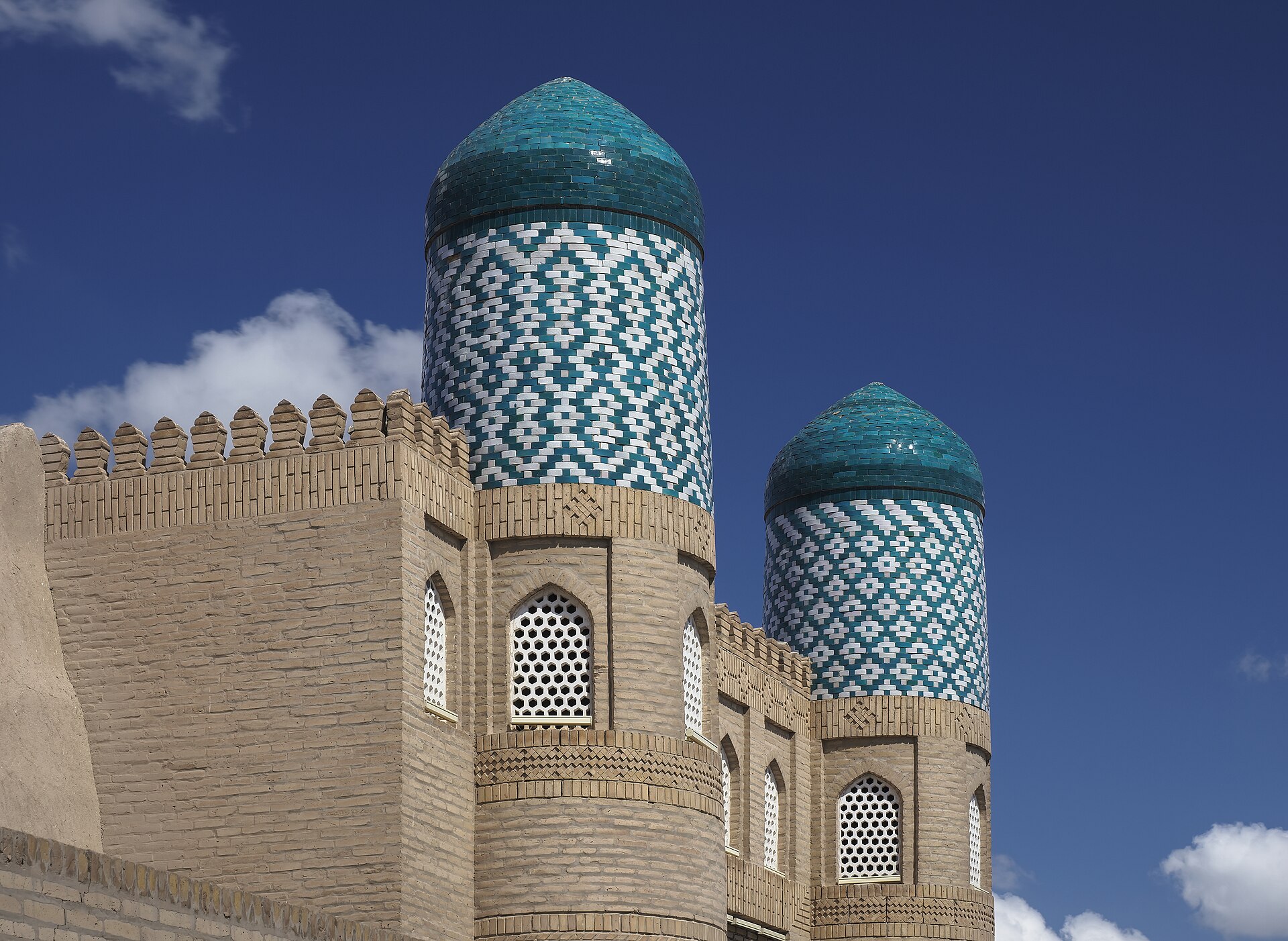
Khiva is the smallest and densest of Uzbekistan’s three great Silk Road cities. The whole old town is inside the wall and is walked in a few hours, but it is precisely that density that makes it look like a museum. Those coming after Samarkand and Bukhara often plan one day here and then add a second. Below I have written about Ichan-Kala and the journey question.
Ichan-Kala and Kalta Minor in Khiva
Ichan-Kala is the walled inner town and is on the UNESCO list as a whole. Inside there are close to fifty monuments and all of them are next to one another. One ticket gives entry to all the sites and you buy it at the booth by the gate.
Kalta Minor is the town’s symbol, is entirely covered in turquoise tiles and was left unfinished. The khan planned it as the tallest minaret in the world, but the building was stopped and the result is a thick, flat-topped body. That flaw has now turned it into the best-known image of the place.
Palaces and wooden columns in Khiva
Kunya-Ark was the khans’ fortress and inside it there are the throne room and the remains of an observatory. You can climb onto the wall and the whole town appears in the palm of your hand; that is the best spot for sunset.
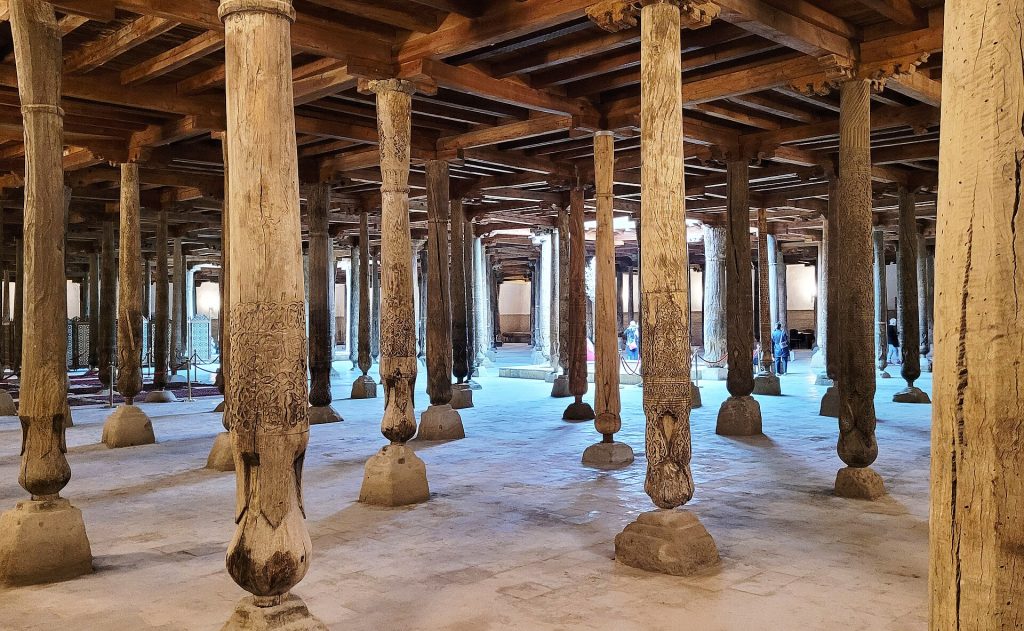
The Friday Mosque is entirely different: inside there are more than two hundred carved wooden columns and the light falls only through openings in the ceiling. In the Tash-Hauli palace you come upon the richest examples of tilework. The Islam Khoja minaret is the tallest and can be climbed inside by a narrow stairway.
The evening hours and Pahlavan Mahmud
The Pahlavan Mahmud mausoleum belongs to the town’s patron and its walls are covered with dark blue tiles. This is still a place of pilgrimage, so noise should be avoided. In the afternoon hours it is full.
The best time, though, is the evening: the group tours leave after five, the town empties and the lighting comes on. If you stay the night inside the wall, you get this view for free. Comparing city tour and guide options helps you understand the history of the monuments.
Read more: An Uzbekistan travel guide: Samarkand, Bukhara, Khiva, the Afrosiyob train and the home of pilaf
How to reach Khiva and the budget
Citizens of Azerbaijan go to Uzbekistan visa-free. The nearest airport is in Urgench, thirty to forty minutes from the town, and there are domestic flights from Tashkent. Coming from Bukhara by train is also possible, but the journey takes close to six hours, so most people do one direction by air.
| A hotel inside the wall | 35–70 dollars a night |
| Outside the wall | Cheaper, within walking distance |
| Single entry ticket | Covers all the monuments |
| Visa | Not required |
Staying the night inside the wall is an experience of its own in this town and means empty streets early in the morning, so compare hotels by inside and outside the wall. There are direct flights from Baku to Tashkent and you continue to Urgench by domestic flight, so check ticket prices in the Tashkent direction in advance. Official tourism information is on Uzbekistan’s official tourism site.
Season in Khiva
April–May and September–October are the most suitable months, with the weather at 20–28 degrees. Khiva is on the edge of the desert, so summer here passes even harder than in Bukhara; in July–August the temperature reaches forty-five and there is almost no shade. Winter is cold and it sometimes snows, but the town is completely empty and looks ideal for photographs. Novruz week is the liveliest period.
In short
Khiva is small, but among the Silk Road cities it is the most complete. Stay inside the wall, buy the single ticket, climb the Kunya-Ark wall at sunset, and rule out the middle of summer entirely. If you want to see Uzbekistan’s three cities in one route, you can look at the ready-made tour options. For a route, fill in the application form.
Note: the domestic flight timetable and ticket prices change with the season, so check before travelling.
