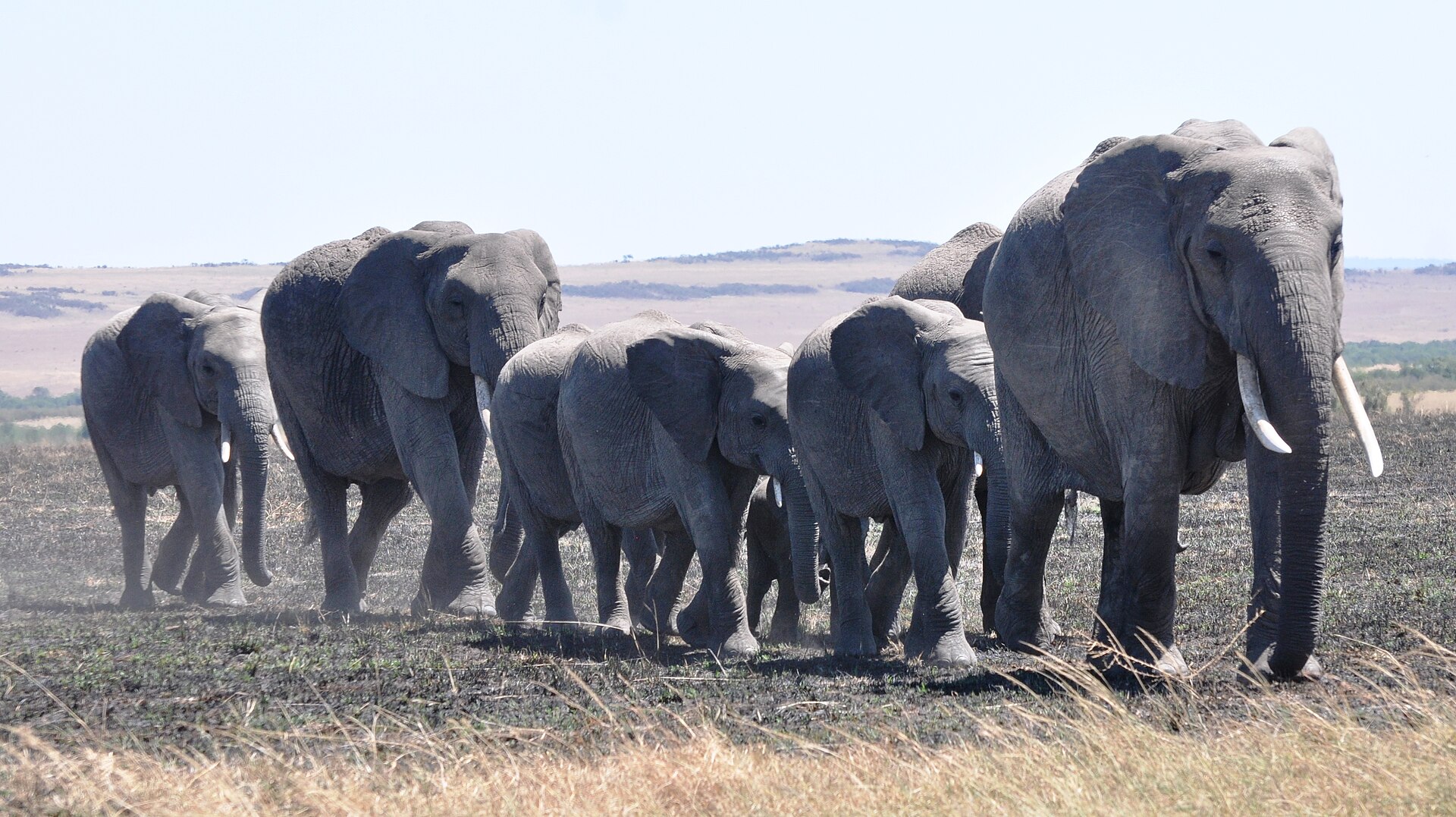
Kenya is the homeland of the safari. On the Masai Mara savannah more than a million antelope migrate, in Amboseli the elephants walk against the snowy peak of Kilimanjaro, and Lake Nakuru is covered in pink flamingos. At the end of the trip the white sand of Diani beach on the Indian Ocean awaits you.
For us the eTA authorisation comes through online in a few days, and the flight via Doha or Dubai is comfortable. A safari is not a cheap trip, let me say that in advance, but the right season and the right choice of park halve the budget. Below I have gathered the parks, the safari types, the fees, the health rules, the food, the season, safety and the budget.
Kenya in brief
| Capital | Nairobi |
| Language | Swahili and English; English works everywhere |
| Currency | Kenyan shilling (KES), 1 dollar ≈ 130 shillings; park fees in dollars, M-Pesa everywhere |
| Visa | eTA online authorisation, up to 72 hours |
| Best time | July–October for the Great Migration; January–February dry and hot |
| Flights | 9–11 hours via Doha or Dubai |
| Daily budget | 250–400 dollars on safari, 80–120 on the coast |
Masai Mara, Amboseli, Nakuru: which park for what?
The Masai Mara is the continuation of Tanzania’s Serengeti park and is Kenya’s most famous safari destination. The «Big Five», that is lion, leopard, elephant, rhino and buffalo, are there all year, and from July to October the Great Migration begins: millions of antelope and zebra cross the Mara river between the crocodiles, and that is the scene you have seen in the documentaries. The park fee is 200 dollars a day in the high season and 100 from January to June.
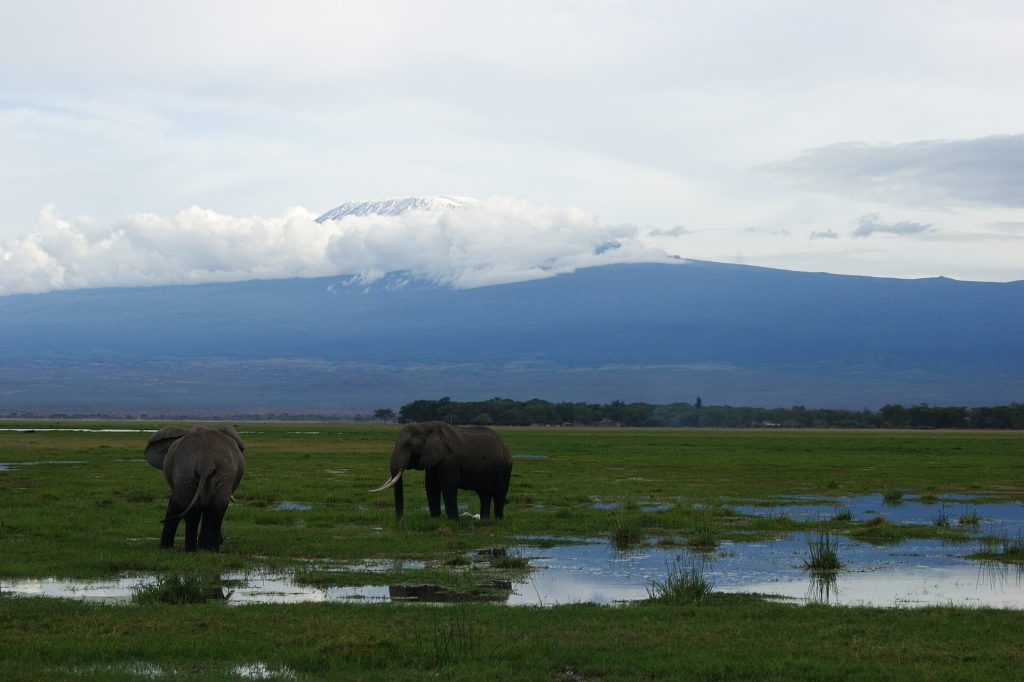
Amboseli, at the foot of Kilimanjaro, is known for its elephant herds. The mountain is only visible cloudless early in the morning and hides behind the clouds after seven, while the journey from Nairobi is four hours.
People go to Lake Nakuru for the flamingos and the white rhino. On Lake Naivasha you watch hippos from a boat, and in the neighbouring Hell’s Gate park you cycle among the animals. Tsavo is the country’s largest park, with elephants covered in red earth and few tourists.
There is a programme in Nairobi itself too. The national park gives you a safari against the backdrop of the city’s skyscrapers, while the Giraffe Centre and the Sheldrick elephant orphanage take half a day. The classic route is built like this: a day in Nairobi, two days at Nakuru and Naivasha, three days in the Masai Mara, two days in Amboseli, and then the coast.
A Kenyan safari: the types, the lodges and the budget arithmetic
A safari is not done on your own, it is done with an operator, and it has three levels.
A group safari is done in a minibus or a Land Cruiser, you spend the nights in a tented camp, and the daily price is 150–250 dollars per person with everything included. When choosing an operator read the reviews, because for the same price you can end up with a completely different vehicle and guide.
A private safari with your own vehicle and guide in a mid-range lodge costs 350–600 dollars. Luxury lodges and «glamping» tents start from 800 dollars, where the tent has a bath and the savannah stretches out at your feet.
The price includes the park fees, the accommodation and three meals a day. There are two «game drives» a day, one at six in the morning and the other in the afternoon.
A fly-in safari takes forty-five minutes from Nairobi to the small airstrips in the Mara and costs 200–300 dollars return. Choosing that instead of five or six hours of dusty road is entirely logical. A sunrise balloon flight over the Mara is 450 dollars; it is expensive, but nobody who has gone has regretted it.
When choosing a lodge, look at the difference between inside the park and a «conservancy» outside it. The conservancies are quieter, and night safaris and walking safaris are only possible there. From Nairobi to Mombasa the SGR train takes five hours and costs 10–30 dollars, and that is the most comfortable way of getting to the coast.
Health: vaccinations, malaria, water
The yellow fever vaccination is required on entry to Kenya only from those coming from an endemic country, and it is not compulsory for someone coming from Baku via Doha. Even so the World Health Organisation recommends it, and a certificate is asked for when crossing into Tanzania, so have it done.
Malaria is present in the safari parks and on the coast, Nairobi excepted. Choose the prophylactic medicine with your doctor before the trip, wear long sleeves in the evenings and use a spray. Hepatitis A and typhoid vaccinations are recommended too.
Be careful with the water: drink only from a bottle, order your drinks without ice, and in the lodges the food is safe. The private clinics in Nairobi are good, and medical insurance including evacuation is a must. AMREF «Flying Doctors» membership gives you evacuation cover for the duration of the safari for 15–30 dollars and is worth it.
Food, the coast and halal
Nyama choma is meat grilled over embers and is the national dish, served with ugali maize porridge and sukuma wiki greens. The Swahili coastal cooking is under Arab and Indian influence, with pilau, biryani and fish in coconut milk. Mandazi is a sweet fried dough, and tea is the country’s main drink, brewed with milk everywhere. In the lodges the food is an international buffet.
Halal food is everywhere in the coastal towns, that is Mombasa, Malindi and Lamu, because most of the population is Muslim. In Nairobi’s Eastleigh and central districts there are many Somali and Indian halal restaurants, and tell the lodges about a halal requirement in advance.
As for the coast, Diani is one of the best beaches in Africa, known for its white sand, its colobus monkeys and its kitesurfing, and it is an hour from Mombasa. Watamu and Malindi have a marine park, while the island of Lamu, with its stone town and dhow boats, is on the UNESCO list.
Read next: There is no Kenya visa, there is an eTA: online authorisation for a safari in 72 hours
Season and safety in Kenya
July to October is the dry season and the time of the Great Migration. That is the best and at the same time the busiest and most expensive period for a safari, and the Mara river crossings fall in August-September.
January-February is the short dry season: the weather is hot, the animals gather at the waterholes, the prices come down and the coast lives its ideal time. From March to May the long rains begin, the roads turn to mud and some lodges close, but the prices come down by 30–50 per cent and everything turns green. In November-December the short rains fall and a safari is possible again.
As for safety, do not walk around Nairobi at night; Uber and Bolt work. Do not show valuables in the street and keep them in the lodge safe. The safari parks and the coastal resorts are quiet, while the region on the Somali border is off limits. Park fees and season information are on the Magical Kenya portal.
Budget and tickets
A week-long group safari with the Mara, Nakuru and Amboseli is 1,200–1,800 dollars per person and a private safari 2,500–4,000. A hotel in Diani is 80–150 dollars, a resort 200–350 and a three-star hotel in Nairobi 60–100.
There are individual programmes too. The balloon is 450 dollars, the Giraffe Centre 15 and the SGR train 30. Excluding the flight, a ten-day safari and coast trip fits into 2,000–3,000 dollars.
Qatar Airways, Emirates and Turkish Airlines fly to Nairobi; an air ticket to Nairobi gets dearer in the migration season and at New Year, while for those heading to the coast separate flights to Mombasa are convenient. Kenya safari tour packages giving you the Masai Mara, Amboseli and Diani in one programme settle the lodges, the park fees and the transfers together and always work out cheaper than planning a safari on your own.
Frequently asked questions about Kenya
How many days does a Kenyan safari need?
Three days minimum for the Masai Mara, and seven with Amboseli and Nakuru. The coast adds three or four days — ten to twelve in all.
Can you go on safari with a child?
Yes, it is comfortable for children over six, and some lodges set an age limit. The long dusty roads and getting up at five are tiring with a small child, and a fly-in safari helps.
Can it be combined with Tanzania?
Yes, the Masai Mara adjoins the Serengeti, but the land border crossing is sometimes closed, and the flight from Nairobi to Kilimanjaro is an hour. Tanzania requires a separate eVisa.
In closing
With an easy eTA, a comfortable flight and the most magnificent safari scenery in the world, Kenya is the right country for a first trip to Africa, and the choice of season and safari type decides the budget. The entry rules are explained on the Kenya page, and to build the safari and coast plan together, fill in the application form.
Note: the prices here are as of the publication date and can change with the season.
