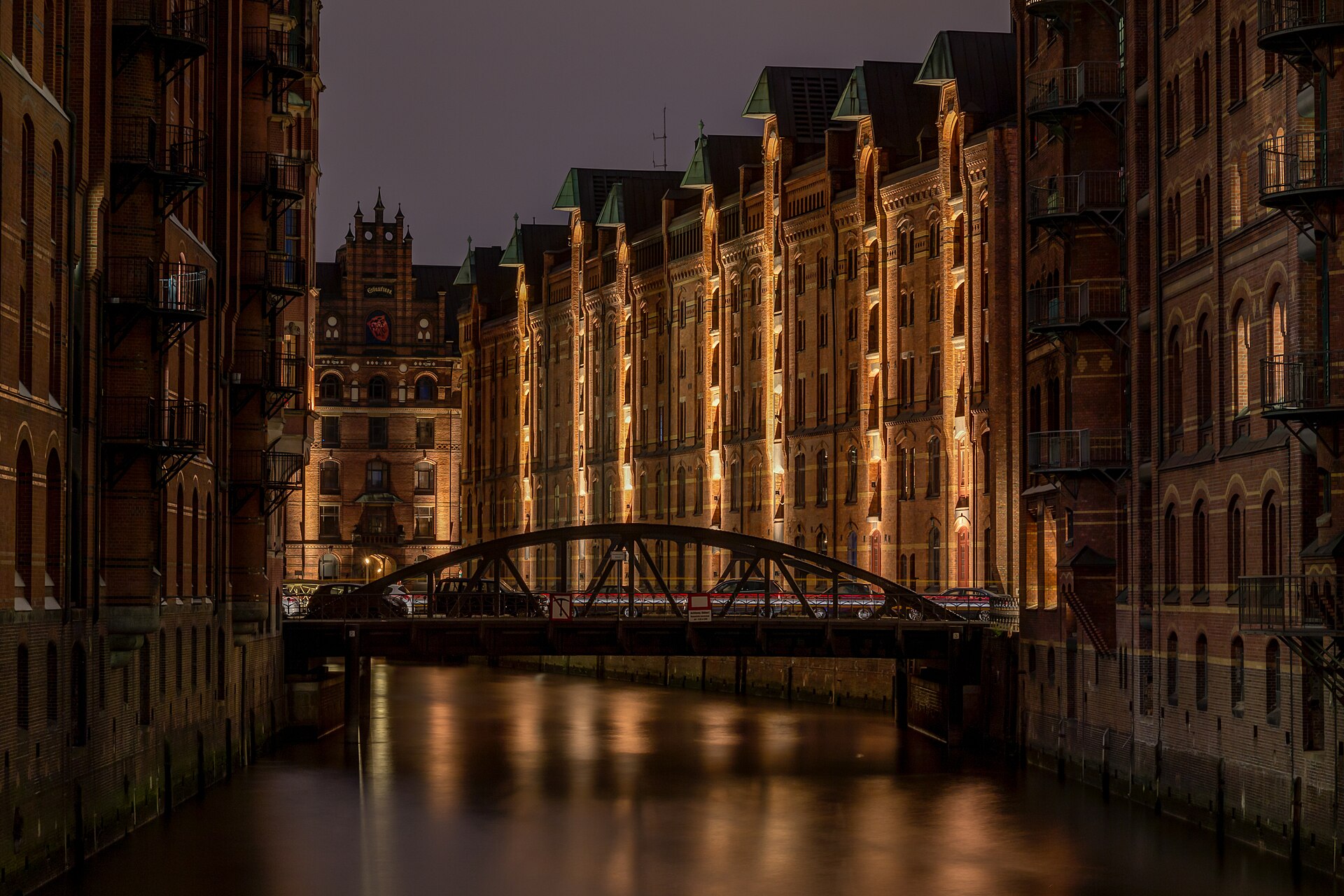
Hamburg is the second largest city in Germany, but it is nothing like Berlin. Here there are no government buildings; there is a harbour, canals and red-brick warehouses, and the city carries itself not as a capital but as a merchant. The number of bridges over the water is greater than the bridges of Venice and Amsterdam taken together, and that is not a joke. Three days are comfortably enough, and a fourth can be given to a nearby city by train.
The Speicherstadt and the Elbphilharmonie
The Speicherstadt is the largest warehouse quarter in the world and is on the UNESCO list. The red-brick buildings lined up over the canals once held coffee, tea and carpets, and are now museums and offices. The best view opens up from the bridges, especially in the evening when the lights come on.
The Elbphilharmonie is a glass wave set on top of an old warehouse and has become the city’s new symbol. A ticket to the concert hall is expensive, but going up to the terrace called the Plaza is practically free; you just need to take an entry card with a time on it. From there the panorama opening onto the harbour and the city’s roofs is visible. In the morning hours the queue is short.
In the same quarter there is Miniatur Wunderland, the largest model railway in the world. Adults look at it more than children do, and the tickets run out days in advance. Taking the entry ticket in advance is, here, a saving of time in the literal sense.
The cheap way to see the harbour in Hamburg
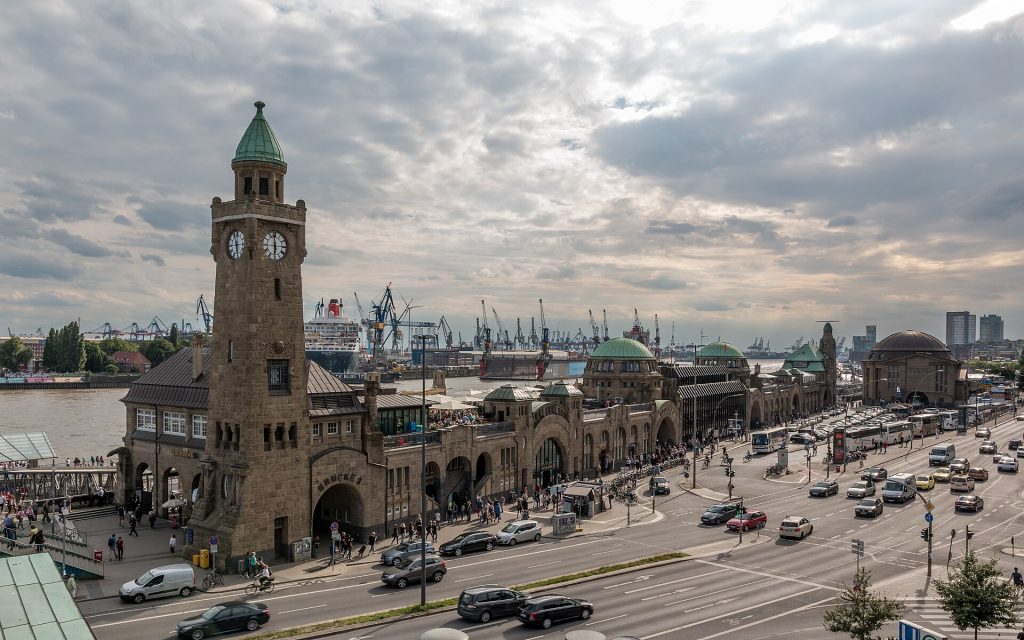
The harbour tour sold to tourists costs twenty to twenty-five euros. Yet ordinary ferries work within the city’s public transport system and they pass through that very same harbour. You can board ferry number 62, which leaves from the Landungsbrücken, with an ordinary day ticket, and you go across to the other side of the Elbe and back.
In terms of the view there is almost no difference; there simply is no guide talking. Come a few minutes early to get a place on deck, because in the afternoon the ferries are full. On the way you pass by the Fischmarkt building and the old tunnel.
St. Pauli, the Reeperbahn and Sunday morning
The Reeperbahn is the city’s night street and is known by its name. In the daytime it looks entirely ordinary, while in the evening the clubs, bars and theatres open. The Beatles spent the first years of their career here, and there is a square dedicated to them next to the metro exit.
On Sunday morning the Fischmarkt opens and this is the city’s most local scene. The sellers shout as they sell fish, fruit and flowers, while in the old auction hall next door live music plays. The market starts early and closes at midday, so do not be late. Those who spend the night on the Reeperbahn often go to the market straight from there.
Read more: A Germany travel guide: the cities, the trains, the food and the season
Transport and budget in Hamburg
The S-Bahn from the airport to the centre takes twenty-five minutes and is considerably cheaper than a taxi. Transport inside the city is a single system, and the day ticket covers the metro, the bus and the ferry together. A three-star hotel night in the centre is roughly 90–140 euros, and in St. Pauli somewhat cheaper; comparing hotel prices by district makes the choice easier.
| Fischbrötchen | A fish sandwich, 5–7 euros at the harbour |
| Franzbrötchen | A cinnamon pastry, the local breakfast |
| Dinner in a restaurant | 25–45 euros |
| Day transport ticket | roughly 8–9 euros |
There is no direct flight from Baku; you go with one transit through Istanbul or Frankfurt. If you can choose your dates freely, following Baku–Hamburg ticket prices for a few weeks shows the difference. The train to the city of Lübeck is forty-five minutes and is an ideal option for a day trip; the tickets can be compared together with trains and buses. Official information about the city is on the hamburg-travel.com site.
Season and weather in Hamburg
The nearness of the North Sea makes the weather changeable, and there can be both sun and rain within a day. May–September is the most comfortable period, the temperature is 18–24 degrees and in the evenings it is possible to walk along the canals. November–February passes windy and damp, but in exchange in December a Christmas market is set up on the Rathaus square. Take a rain jacket regardless of the season.
In short
Hamburg is not a museum city but a working harbour city, and that is exactly why it is interesting. Go up to the Elbphilharmonie terrace in the morning, board an ordinary ferry instead of a harbour tour, and go to the Fischmarkt early on Sunday. If you want to travel Germany along with several cities, you can look at the tour offers in the direction of Germany. For a visa and a route, fill in the application form.
Note: the prices in this article are those at the time of publication and may change with the season.
