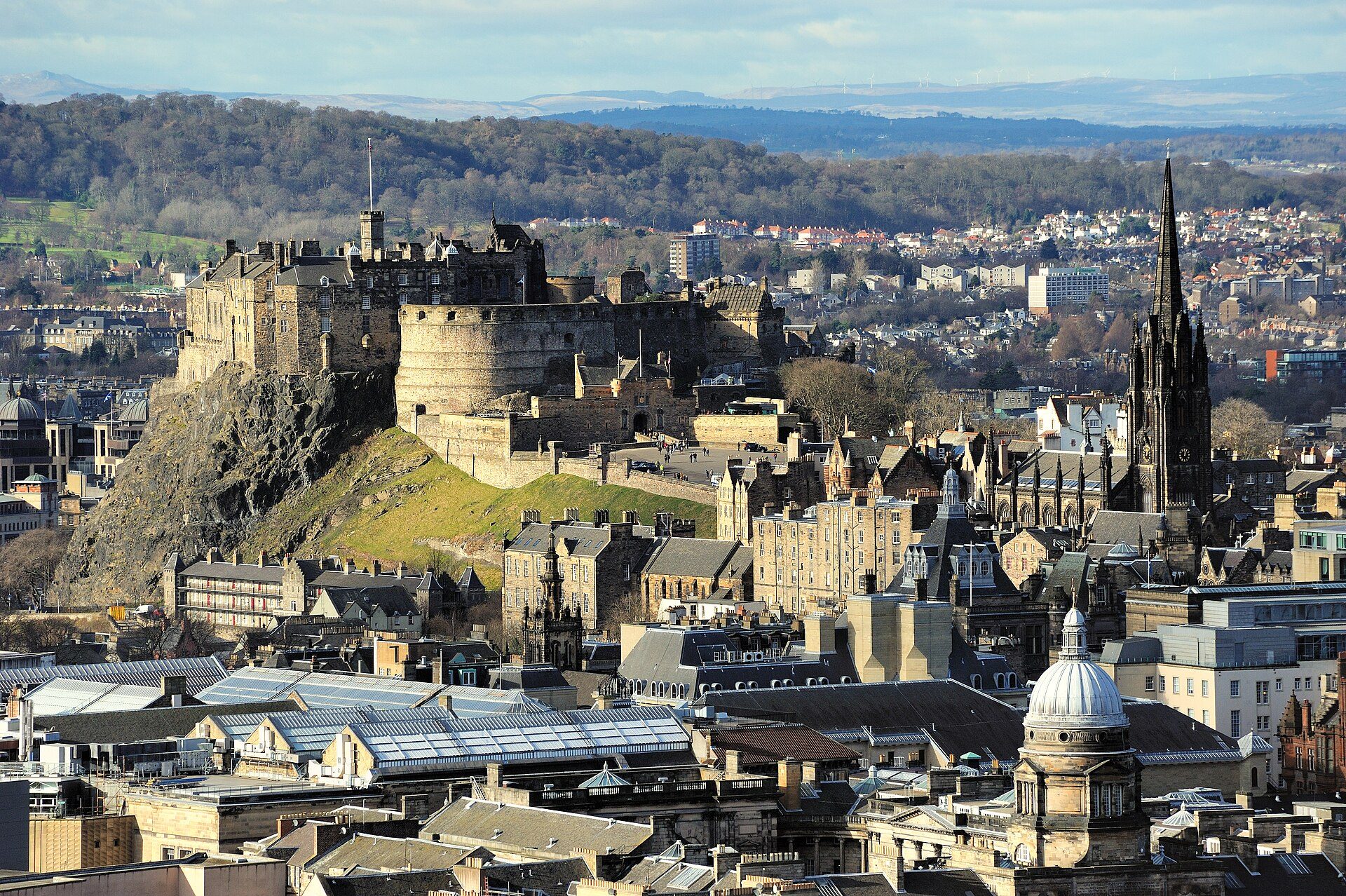
Edinburgh is two cities in one. The old town is made of dark stone, narrow passages and dense building beneath the castle. The new town was laid out in the eighteenth century in straight lines with wide avenues. Both are on the UNESCO list. You need a British visa; a Schengen one is not valid here. Below I have written a three-day route.
The castle and the Royal Mile
Edinburgh Castle stands on the rock of an extinct volcano and is visible from everywhere in the city. Inside, the Scottish crown jewels and the Stone of Destiny are kept. Buy the ticket online with a time slot; in summer there is a long queue at the box office. A gun is fired every day at one o’clock, a tradition that has lasted more than two hundred years.
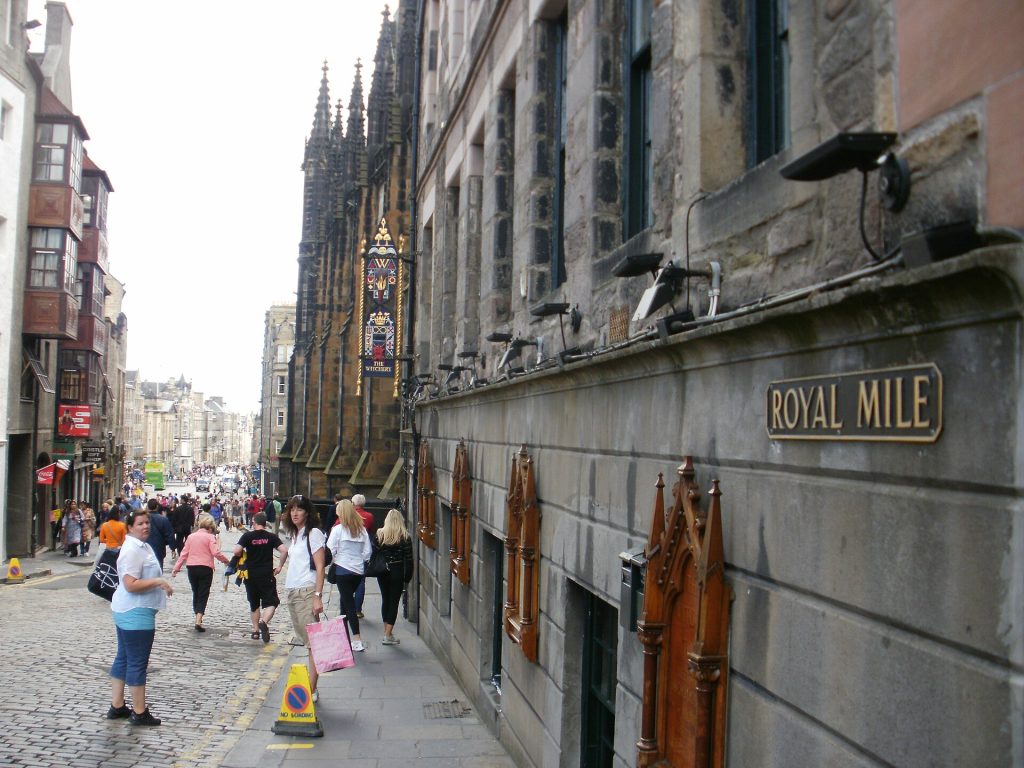
The street running from the castle down to Holyrood palace is called the Royal Mile and is a mile long. There are narrow passages called closes on both sides of it — go into them, because the real old town is in there. The underground street tours also start in that area.
Arthur’s Seat and the free museums
Arthur’s Seat is an extinct volcano in the middle of the city and the climb to the summit takes an hour. From the top the whole city, the sea and the bridges are visible. The wind is strong, so a jacket is essential. Calton Hill is easier and is climbed in fifteen minutes.
Entry to the National Museum of Scotland and the National Gallery is free. The castle is visible from the terrace on the museum’s roof, and few people know that. The Scotch whisky experience centre is paid and shows the history of the industry. Taking the castle ticket and the tours in advance is close to essential in August.
The August festival and the season
In August the city holds the largest arts festival in the world, called the Fringe. Thousands of shows are performed in the streets and many are free. In that month the city fills completely, hotel prices triple and places run out months ahead. If you are coming for the festival, book in the spring.
May–June and September are quieter and better value, with 14–19 degrees. Seeing four seasons in one day is normal in Scotland, and a waterproof jacket is needed all year. Winter is not cold but it is dark, and in December there is a Christmas market and the new year celebrations.
Read more: A United Kingdom travel guide: London, Edinburgh, the trains, the Oyster card and the budget
From Edinburgh to the Highlands
Day tours to the Scottish Highlands leave from the city and cover Loch Ness and the Glencoe valley, taking a full day. Stirling Castle is an hour by train. St Andrews is a coastal town and is considered the home of golf.
The train to London takes four and a half hours, and a ticket bought early is cheaper than flying. Glasgow is only fifty minutes away. Compare the ticket options on one screen.
Prices in Edinburgh
A three-star hotel in the centre is 110–170 pounds, and 80–130 in the Leith district. A hostel bed starts at 25–45 pounds. The castle ticket is 21 pounds and the museums are free. Lunch in a pub costs 12–18 pounds; haggis is the national dish and there is a vegetarian version too. Official information is on the This is Edinburgh site.
In closing
Edinburgh is small, but its atmosphere is the strongest in Britain and three days is quite enough for it. Buy the castle ticket in advance, climb Arthur’s Seat, and choose the August festival deliberately or avoid it deliberately. For a visa and a route, fill in the application form.
Note: the prices in this article are those at the time of publication and may change with the season.
