Colombia is the country that has changed the most in South America over the past decade. Medellín, once known only from the news, is now on the list of the world’s most innovative cities; Cartagena is the most beautiful colonial city on the Caribbean; and the coffee region, with its green hills and wax palms, is a UNESCO heritage site. For us it is 90 days visa-free and entry with the Check-Mig form is simple. Safety is still the main question, and the answer is in one local phrase: «no dar papaya», that is, do not give anyone the chance. In this article I have gathered the cities and the coffee region. The transport, the food, the season, the safety rules and the budget are here too.
Colombia in brief
| Capital | Bogotá, at 2,640 metres |
| Language | Spanish; English only in tourism, you need a translation app |
| Currency | Peso (COP), 1 dollar ≈ 4,000 pesos; cards in the cities, cash in the villages |
| Visa | 90 days visa-free for citizens of Azerbaijan, the Check-Mig form online |
| Best time | December–March and July–August, the dry months |
| Flights | 16–20 hours via Istanbul or Madrid |
| Daily budget | 60–90 dollars at a mid-range level |
Cartagena, Medellín, Bogotá
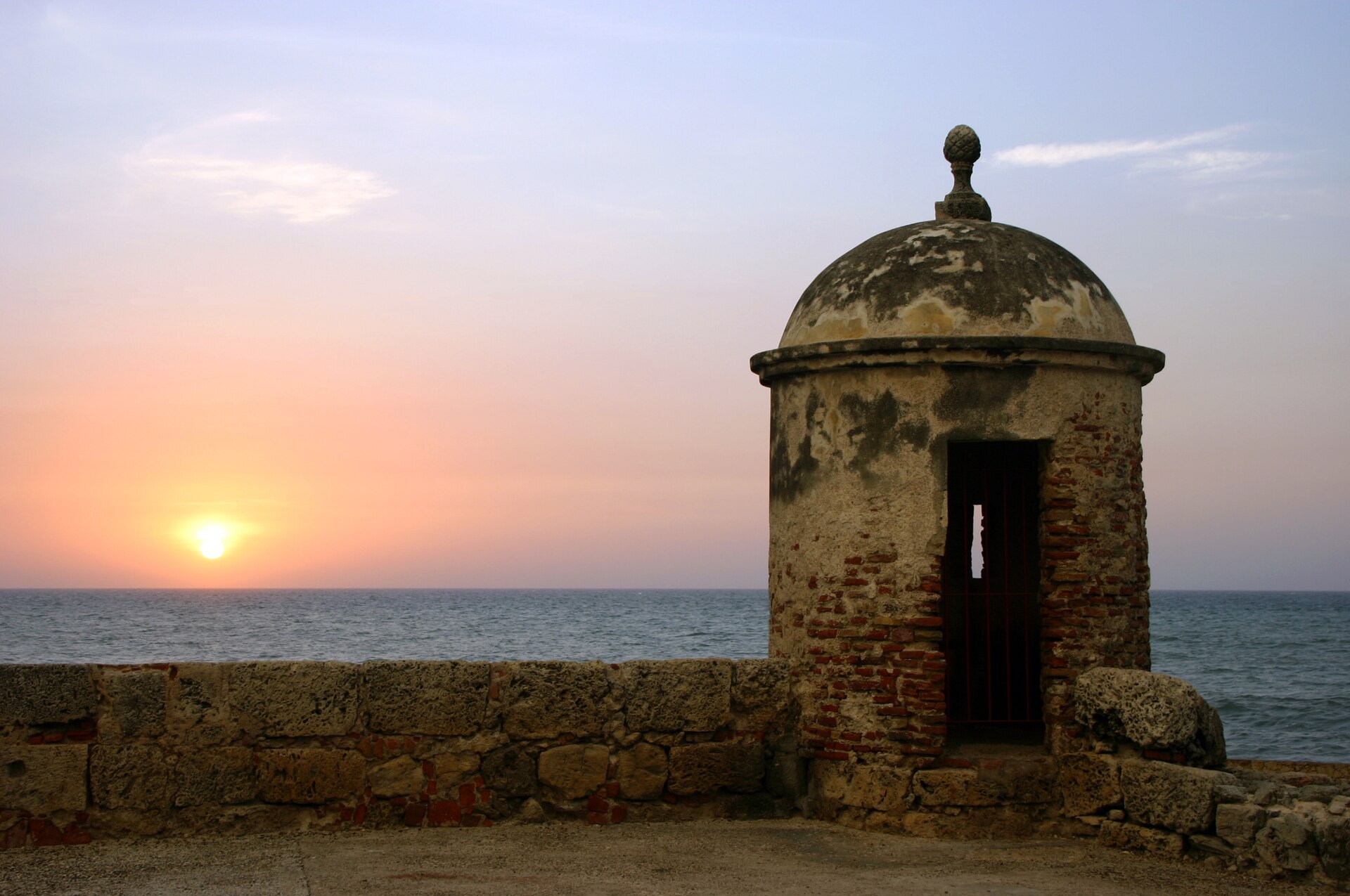
Cartagena is a colonial city on the Caribbean coast surrounded by eleven kilometres of wall. The coloured balconies, the bougainvillea and the San Felipe fortress are there, and at sunset people walk along the top of the wall.
The Getsemaní quarter is known for its street art and its evening square, and a boat trip to the Rosario islands takes a day. The city is thirty degrees and humid all year, so walk around early in the morning and retreat to the pool at midday. Set aside three days.
Medellín is «the city of eternal spring», 22–25 degrees all year. The escalators and graffiti of the Comuna 13 district are the symbol of the city’s turnaround; the police once could not go in there, and now tourists walk about. You ride up the hills on the Metrocable. Botero square and the restaurants of the Poblado district are in the centre. Guatapé is two hours away, and the lake and the seven-hundred-step Peñol rock make a day trip. Set aside three days for the city. Bogotá is at 2,640 metres and passes cool and rainy. La Candelaria is the old town. The world’s richest Gold Museum and the Botero museum are here. You go up Monserrate mountain by funicular. On Sundays the city’s main roads are given over to bicycles. Take the first day slowly because of the altitude, and set aside two days for the city. Cali is the salsa capital and the island of San Andrés the Caribbean’s «sea of seven colours».
Colombia’s coffee region and Tayrona
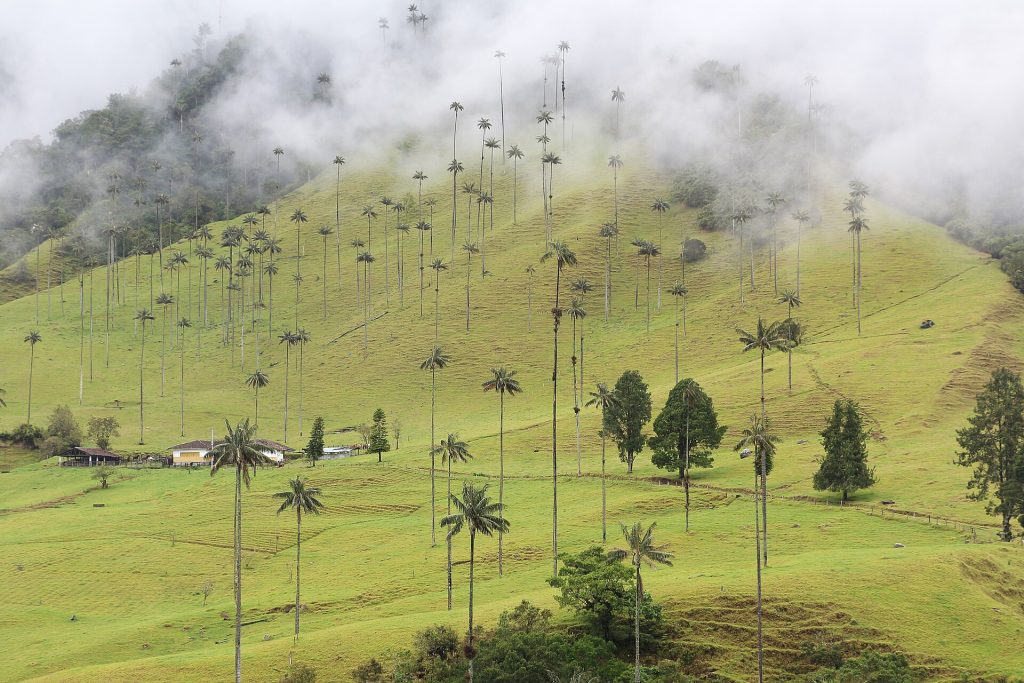
The Eje Cafetero coffee region is the green hills between Medellín and Bogotá. Salento is a coloured village. In the Cocora valley you walk among sixty-metre wax palms. On the coffee farms a «finca» tour is organised, and they show you everything from picking the bean to the cup. The viewing tower of the village of Filandia is nearby as well. At Santa Rosa de Cabal the hot springs come with thermal pools right under a waterfall. It is an hour from Bogotá to the Pereira or Armenia airports; three days.
In the north Santa Marta is the gate to Tayrona national park. The park has jungle and Caribbean beaches, and at the Cabo San Juan camp you sleep in a hammock. The park closes one day a week, so check the date.
The nearby mountain village of Minca is known for its coffee and waterfalls. The four-day trek to the Lost City, meanwhile, counts as Colombia’s Machu Picchu.
It is convenient to split the route in two. Cartagena, Santa Marta and Tayrona give you the coastal route, while Medellín and the coffee region give the inland one.
Transport in Colombia: flights, buses and apps
The country is mountainous and the intercity bus journeys are long: nine hours from Bogotá to Medellín and thirteen from Medellín to Cartagena.
Domestic flights are cheap instead. With Avianca, LATAM and Wingo it takes an hour and a half from Bogotá to Cartagena and costs 40–80 dollars, getting cheaper still when booked early, while the luggage is paid for separately. On the short routes the bus is comfortable: an hour from Salento to Armenia and two hours from Medellín to Guatapé.
In the cities Uber is officially in a grey zone but works, and the Cabify and DiDi apps are convenient. Do not hail a taxi off the street. The Medellín metro is the cleanest in South America and the Metrocable is an attraction for tourists in its own right, while in Bogotá the TransMilenio buses are crowded and full of pickpockets. A car only makes sense for the coffee region, and the mountain roads are slow anyway.
Food: arepas, bandeja paisa and the juices
The arepa is a corn bread and the basis of every breakfast. Bandeja paisa is Medellín’s enormous plate, with beans, rice, meat, egg, banana and avocado on it, and whoever eats one stays full until evening. Ajiaco is Bogotá’s chicken and potato soup, while on the coast fried fish is served with coconut rice.
The empanada is the street snack, and the lunch called «menú del día» comes to 3–5 dollars.
Tropical fruit juices are a dollar on every corner. Lulo, maracuyá, guanábana — you hear the names for the first time, so try them all. Drink Colombian coffee on the farm, though, because the best beans go for export, not to the city cafés.
Halal food is limited to a few Arab restaurants in Bogotá and Cartagena, while the town of Maicao has a Lebanese community. Fish, chicken and a vegetarian option are found everywhere. The tap water is drunk in Bogotá and Medellín, and on the coast buy bottled water.
Read next: Do you need a visa for Colombia? 90 days visa-free, the Check-Mig form and the route via Istanbul
Safety: the «no dar papaya» rule
Colombia is far safer for tourists than it used to be, but the rules are strict and the locals follow them themselves. Do not carry your phone in your hand in the street, as they snatch them from motorbikes. Do not walk alone at night, call a car with an app. Do not accept a drink or a cigarette from someone you do not know, as there are cases of people being drugged with scopolamine and robbed. In Bogotá be careful in La Candelaria in the evening, in Medellín stay in the Poblado and Laureles districts, and in Cartagena the walled city and Getsemaní are quiet. Part of the rural areas is still under the control of armed groups, so do not stray off the route and look at the recommendations of the Ministry of Foreign Affairs. The tourist police are at the main sites. The great majority of travellers who follow these rules come back without problems, having met some of the warmest people in the world.
When should you go to Colombia and what does it cost?
It is an equatorial country, so the season changes not with the months but with the altitude. Cartagena is thirty degrees all year, Medellín twenty-four and Bogotá 14–18.
December-March and July-August are the dry months and count as the best time, while December-January is the holiday season and passes expensively. April-May and October-November are rainy, with afternoon downpours in Bogotá and the coffee region.
There are two events in the calendar. The flower festival is held in Medellín in August and the Barranquilla carnival in February.
In Cartagena a boutique hotel inside the wall is 100–180 dollars and a guest house in Getsemaní 40–70. In Medellín a three-star hotel is 50–80 dollars and a farmhouse in Salento comes to 40–70. A hostel bed is 12–20 dollars and that network is very strong in Colombia.
The entry tickets are all but symbolic. The Gold Museum takes a dollar and Tayrona park twenty, while the Cocora hike is free. In the coffee region a finca tour starts from 15 dollars, and at the small farms booking a place in advance is important. Excluding the flight, a two-week trip fits into 1,200–1,800 dollars per person.
Turkish Airlines flies from Istanbul to Bogotá via Panama, while Iberia and Air Europa fly from Madrid to Bogotá and Cartagena. An air ticket to Bogotá is between 1,100 and 1,500 dollars, and the Madrid connection does not require a Schengen transit visa. For those touring Cartagena, Medellín and the coffee region on one route, Colombia tour packages settle the domestic flights and the safe transfers together. Regional and festival information is on the Colombia Travel portal.
Frequently asked questions about Colombia
How many days does a Colombia trip need?
Cartagena three, Medellín three, the coffee region three and Bogotá two — twelve days is the ideal plan. With Tayrona, fifteen days.
Is it hard without Spanish?
English works in Cartagena and in the hotels, and elsewhere it is difficult. A translation app and a few Spanish phrases change the trip completely, and Colombians are patient and warm.
Is a yellow fever vaccination needed?
A certificate may be asked for to enter Tayrona, the Amazon and some national parks, so have it done ten days before the trip. For the cities it is not required.
In closing
Colombia is visa-free and cheap and gives you the Caribbean coast, the mountain cities and the coffee valleys on one trip; for the traveller who does not «give papaya», the warmest welcome in South America is here. The entry rules are gathered on the Colombia page, and to build the route and the domestic flight plan together, fill in the application form.
Note: the prices here are as of the publication date and can change with the season.
