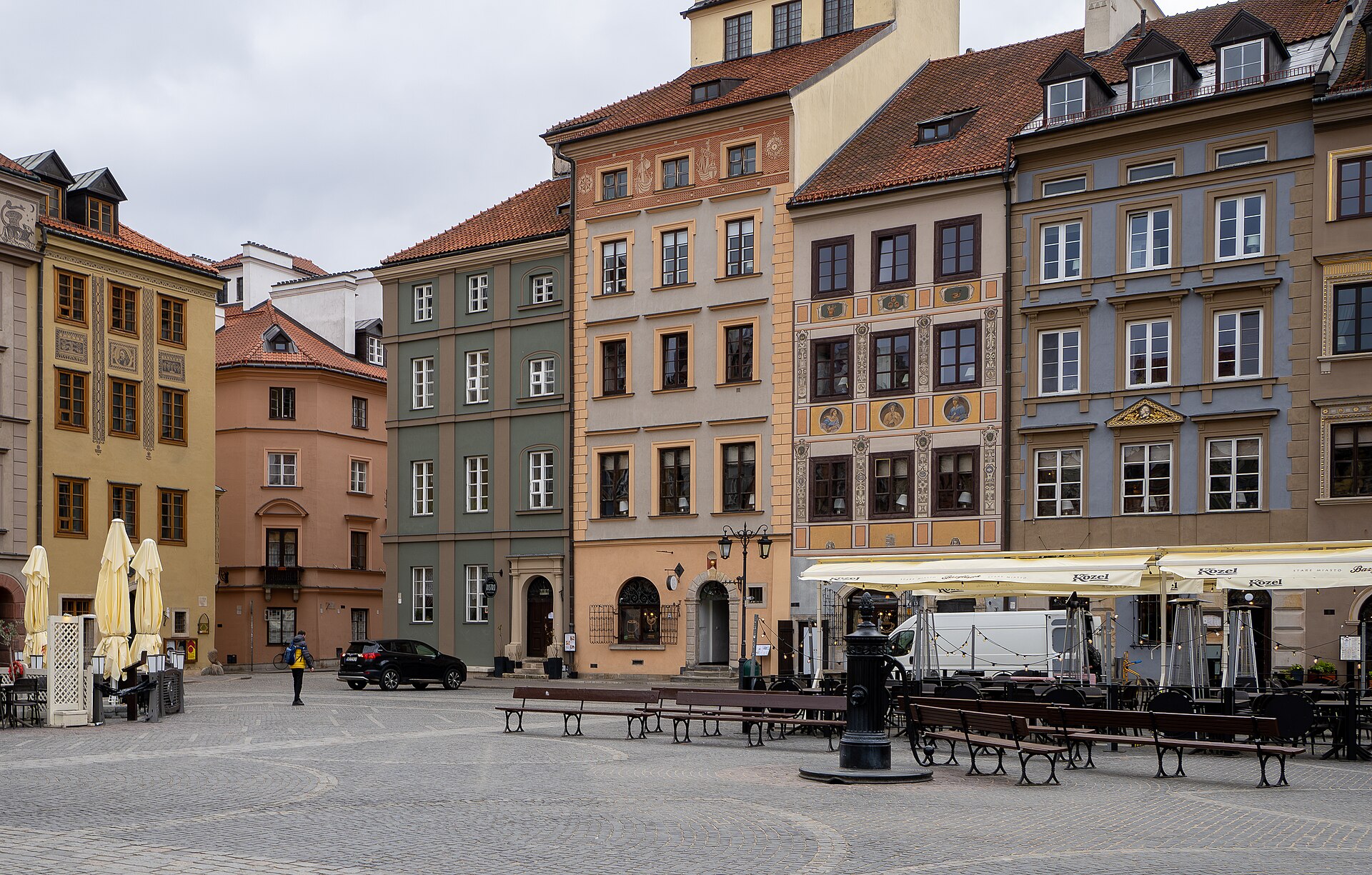
Warsaw’s old town does not date from the Middle Ages. In the Second World War eighty per cent of the city was destroyed, and the old centre was afterwards rebuilt by looking at old paintings and photographs. UNESCO put it on the list for precisely that reason, because what is protected is not the buildings but the decision to rebuild. When you know this, you look at the city with entirely different eyes.
The old town and the Royal Route
Start at the square; the coloured houses around it and the Royal Castle are the result of the rebuilding work. Inside the castle, real objects saved before the war are kept. From there the long avenue called the Royal Route stretches south and runs as far as Lazienki park. Along the way there are churches, the university building and cafés.
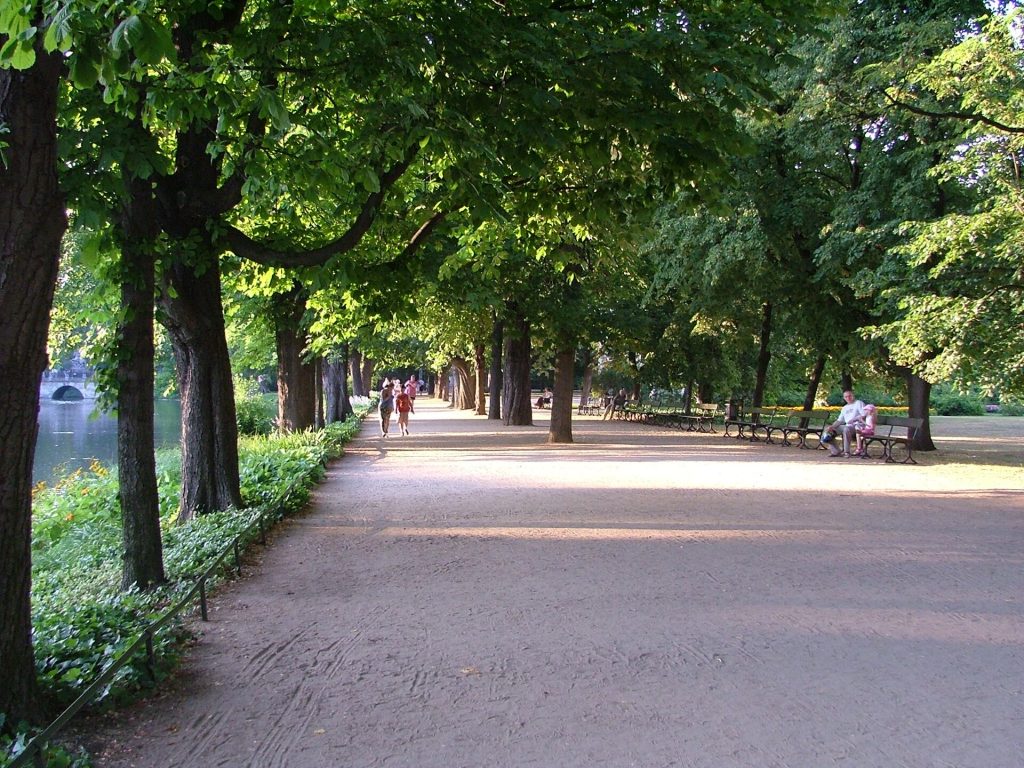
In Lazienki park, on Sundays in summer, open-air Chopin concerts are given and entry is free. Chopin’s heart is kept in the Church of the Holy Cross, inside a pillar, which is one of the city’s most unusual facts.
The war and resistance museums
The Warsaw Uprising museum is the most important place for understanding the city and takes several hours. The POLIN museum is dedicated to a thousand years of Polish Jewish history and stands out for its architecture too. Both are modern in their design and it is possible to go round them with children.
The Palace of Culture and Science remains from the Soviet period and is the city’s tallest building. Warsaw people do not like it, but the view from the terrace on its thirtieth floor is the best, because the building itself is not in the frame. If you take the museum and walking tours in advance, you skip the weekend queue.
Transport and prices in Warsaw
The metro has two lines, while the tram and bus network is wide and punctual. A twenty-minute ticket is 3.4 zloty and a day ticket 15 zloty. Chopin airport is very close to the centre and takes twenty minutes by suburban train. Modlin airport is further out and the cheap flights land there. If you are coming from Baku with a transit, comparing the route on bilet.az saves time.
Poland is among the most economical of the Schengen countries. The old-style canteens called milk bars still work and a full lunch there comes to 25–35 zloty. Pierogi are the best-known dish and there are several kinds according to the filling. A hostel bed starts from 12–25 euros, while a three-star hotel is 50–85.
Read more: A Poland travel guide: Krakow, Warsaw, Gdansk, Zakopane and cheap Europe in the milk bars
Season in Warsaw
May–September is the best period, the weather is 18–26 degrees and the parks come alive. Winter is long and cold, in January the temperature drops below zero, but the city looks beautiful in the snow. In December the Christmas market is set up in the old town. Spring and autumn are rainy and a waterproof jacket is needed.
Official tourism information is on the Warsaw Tour site. The high-speed train to Krakow takes two and a half hours, so combining the two cities in one trip makes a great deal of sense.
Conclusion
Warsaw is a city that affects you through its story more than through beauty, and walking it without knowing that story is pointless. Give half a day to the uprising museum, have lunch in a milk bar, and put Krakow in the route as well. For a visa and a route, fill in the application form.
Note: the prices in this article are those at the time of publication and may change with the exchange rate.
