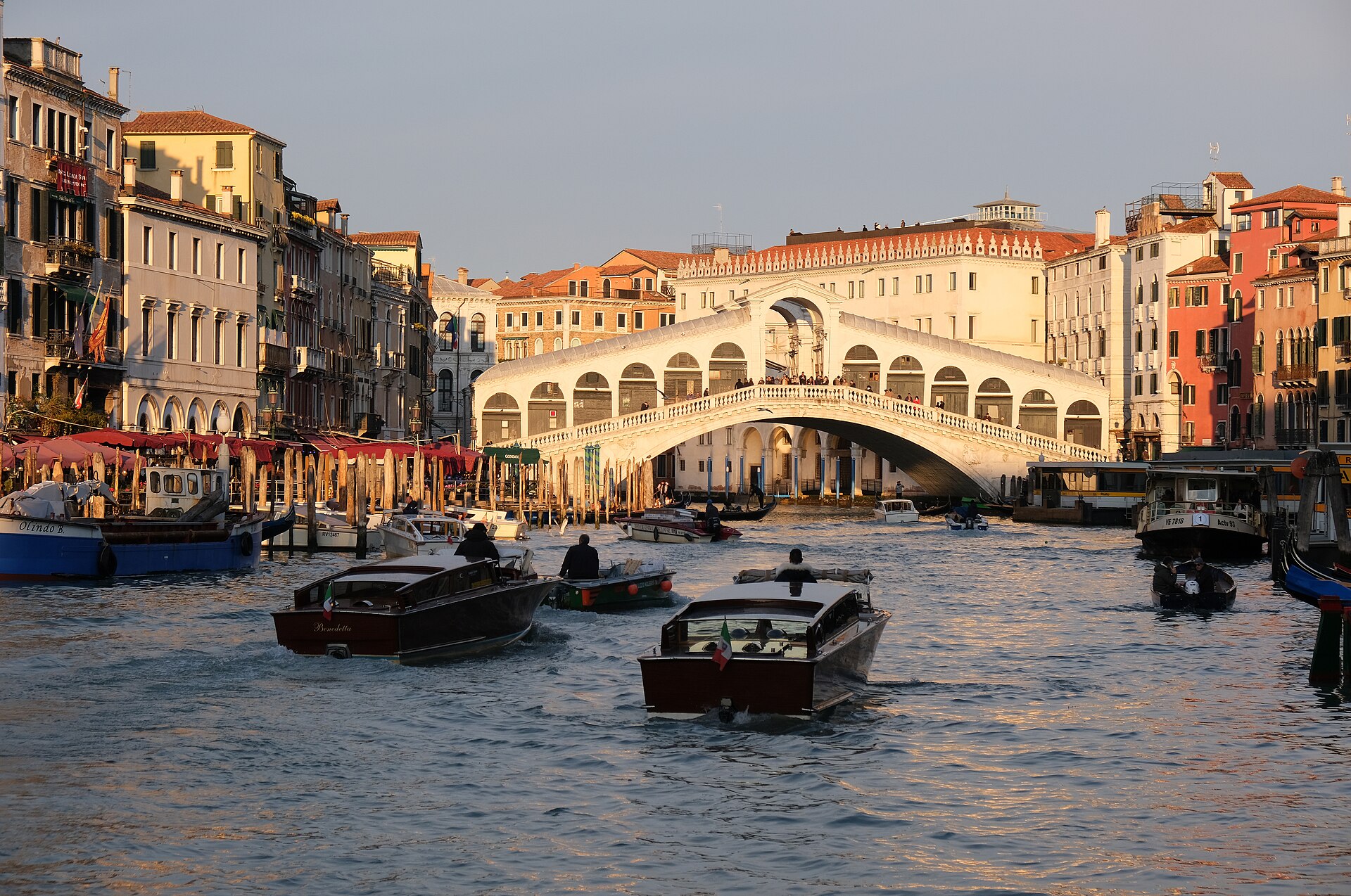
There are no cars in Venice, and no bicycles either. Either you go on foot or you go on the water. This is a condition found in no other large city in the world and it changes the whole logic of the place. There is one problem: in the daytime the cruise ships unload thousands of people. The solution is simple — stay the night here, because after seven in the evening Venice turns into an entirely different city. If you do not want to build the route yourself, you can look at guided group tours.
Venice in brief
| Country | Italy; 118 islands, 400 bridges |
| Visa | Schengen «C» visa |
| Entry fee | Applied to day visitors on certain days |
| Best time | April–May and October |
| Transport | The vaporetto, that is, the water bus |
| How many days | Two nights |
St Mark’s and the Doge’s palace
St Mark’s square is the heart of the city and the basilica is known for its golden mosaics. The queue at the entrance is long and a timed ticket settles that. If you go up to the upper floor inside, the square is visible from the balcony. The campanile tower has a lift, so going up is easy.
The Doge’s palace was the administrative centre of the republican period and is joined to the old prison by the Bridge of Sighs. The separate tour called the secret itinerary shows the narrow rooms inside the wall and is more interesting than the ordinary tour. If you take the tickets and tours in advance, you do not wait for hours in the square.
Water transport and the gondola in Venice
The vaporetto is the city’s bus, a single ticket is roughly 9.5 euros and that looks expensive. There are day and two-day pass options, and if you are staying more than two days they work out cheaper. Line one goes along the Grand Canal and is in effect a cheap excursion.
The gondola price is set by the state: thirty minutes is roughly 90 euros in the daytime and 110 in the evening. The price is per boat and up to five people can board, so sharing makes sense. The cheap option is called the traghetto, which takes you across the canal on an old gondola and costs a few euros.
The islands and escaping the crowd
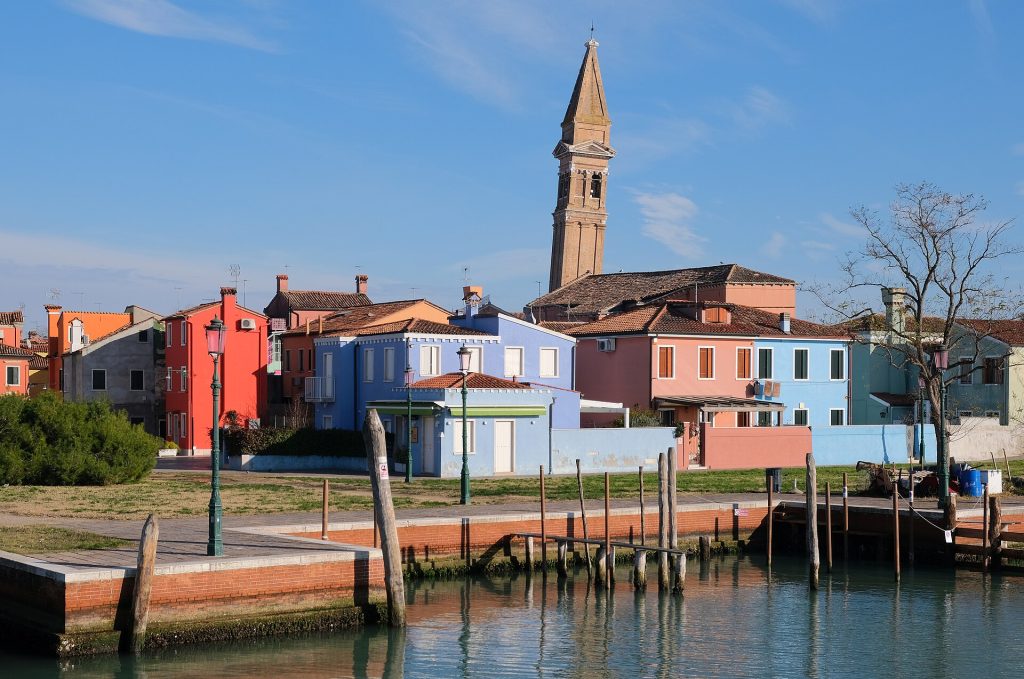
Murano is known for its glass workshops and Burano for its coloured houses, and a vaporetto runs between the two. Half a day is enough for both. Torcello is quieter and has ancient mosaics.
In the city itself the Cannaregio and Dorsoduro quarters stay quiet even in the daytime. The tourist flow gathers on the narrow line between the Rialto bridge and St Mark’s, and stepping two streets away from it is enough. At eight in the morning there is almost nobody in St Mark’s square.
Read more: An Italy travel guide: Rome, Florence, Venice, Amalfi and the classic route by high-speed train
Season, food and budget in Venice
April–May and October are the most balanced months. Summer is hot, humid and very crowded. In autumn and winter there is the flooding called «acqua alta», temporary wooden walkways are laid across the squares and rubber boots are sold. In February the carnival is held and prices double.
In the food there are the small snacks called cicchetti, eaten standing up in bars, and they are cheap. The seafood is good, but in the restaurants on the square the price is twice as much. A three-star hotel in the centre is 140–220 euros, while on the Mestre side it is 70–110, so compare the two options. Official information is on the Venezia Unica site.
In one sentence
Walking Venice in the daytime is the biggest mistake, as the real city opens up early in the morning and late in the evening. Stay two nights, buy a vaporetto pass, and step off the Rialto line. For a visa and a route, fill in the application form.
Note: the prices in this article are those at the time of publication and may change with the season.
