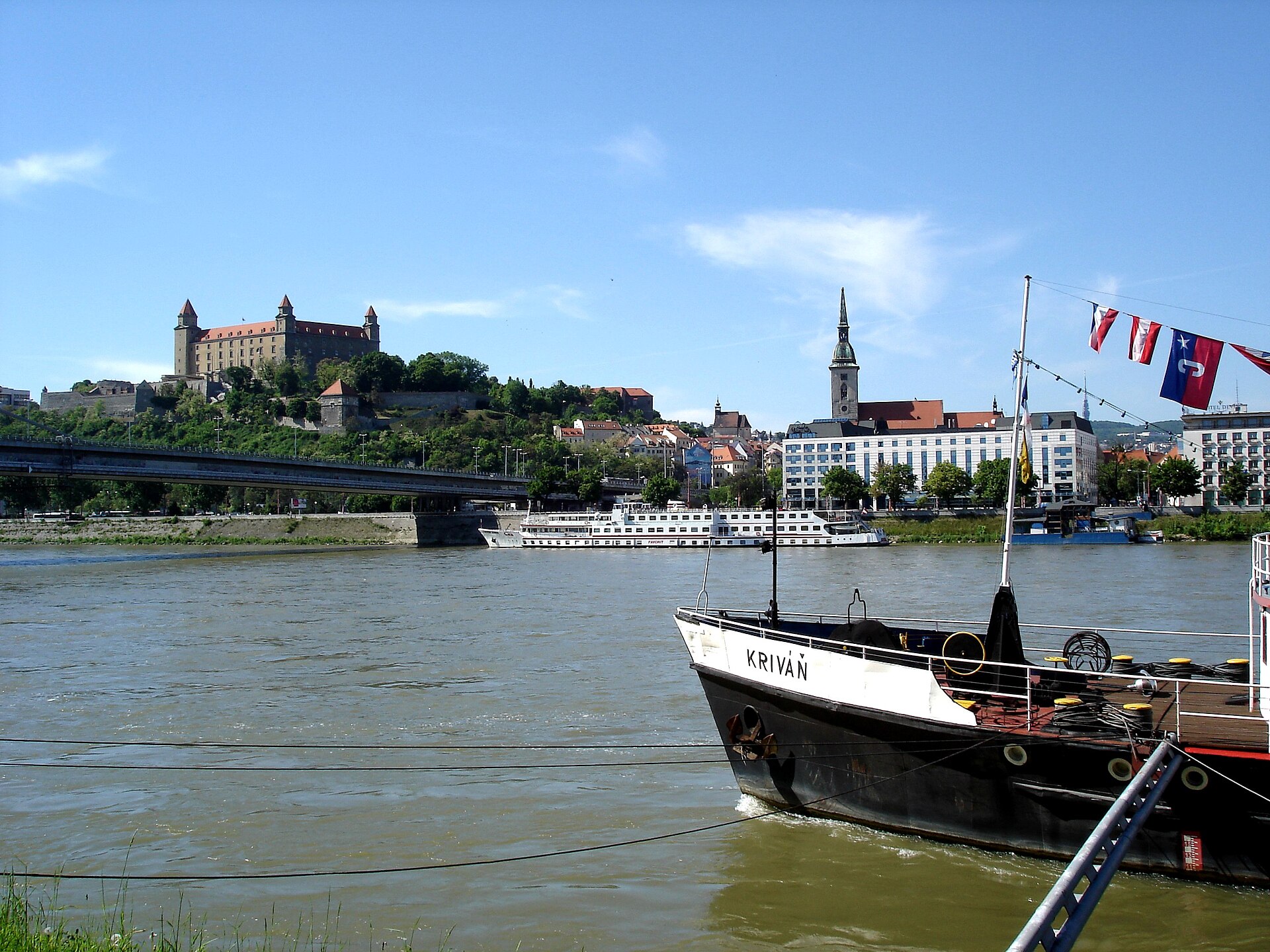
Slovakia is the least known Schengen country in Central Europe, and that is exactly why it is cheap, quiet and warm-hearted. Bratislava, an hour from Vienna, is here; the High Tatras wait with their lakes and peaks; and Spiš, the largest castle complex in Europe, is in this country too. The century-old sulphur mud of Piešťany and the thermal parks of Liptov are a reason to come in themselves.
For us the visa process is a little odd: on a Wednesday you ask for an appointment by email. Even so, the fee is only 35 euros, and I have seen this route many times — it works. Below I have gathered Bratislava, the Tatras, the castles and the spas, along with the transport, the food, the season and the budget, in one place.
Slovakia in brief
| Capital | Bratislava; the second city is Košice |
| Language | Slovak; English among the young, German in Bratislava |
| Currency | The euro; cards everywhere |
| Visa | Schengen type «C», the embassy in Baku, appointment by email, 35 euros |
| Best time | May–September; skiing at Jasná December–March |
| Flight | Via Vienna, then 1 hour by bus to Bratislava; Košice with an Istanbul connection |
| Daily budget | 60–90 euros at a mid-range level |
Bratislava and Devín
Bratislava is a small capital on the Danube between Vienna and Budapest and wants a day or two. The white four-towered Bratislava castle looks down from its hill over the city and over Austria. In the old town there are St Michael’s Gate and the Main Square, while St Martin’s Cathedral is where the Hungarian kings were crowned. The bronze statue of Čumil and the other street sculptures show the city’s sense of humour. The Blue Church is an Art Nouveau masterpiece, there is a panoramic restaurant on the UFO bridge, and on the Danube bank there is Eurovea.
Devín castle is twenty minutes from the city by bus. It stands like a ruin on a rock at the meeting of the Morava and the Danube, with the Iron Curtain border memorial beside it, and entry is five euros.
Bratislava sits right in the middle of a three-capital route. Vienna is an hour by bus and train and Budapest two and a half. Nearby are Trnava, called “little Rome” for its churches, and the Piešťany spa an hour away.
The High Tatras, the castles, Košice: Slovakia beyond the capital
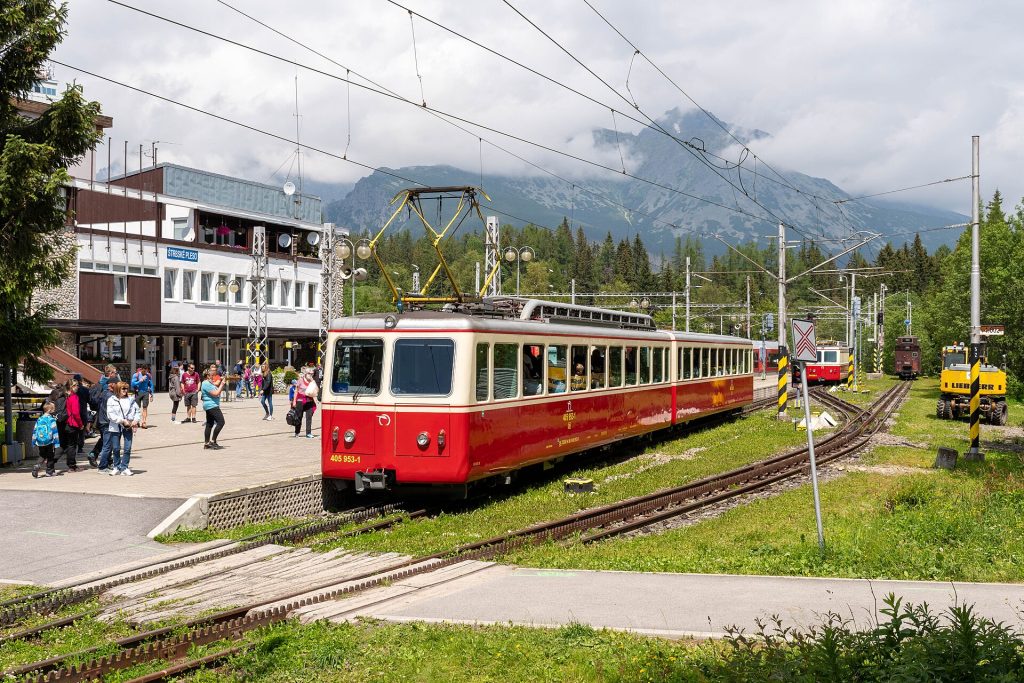
The High Tatras are the smallest high mountain range in the world, four hours by train from Bratislava. Štrbské Pleso at 1350 metres consists of a lake and hotels, and the walk to Popradské Pleso lake starts there. From Tatranská Lomnica you go up by cable car to the 2634-metre Lomnický štít and to Skalnaté Pleso. The Starý Smokovec funicular takes you up to Hrebienok. The Tatra electric railway links all the resorts. In summer it is hiking and in winter ski season. Jasná, in the Low Tatras, is the country’s largest ski resort. In the Liptov region there are the Tatralandia and Bešeňová thermal water parks, the Demänovská caves and Vlkolínec, the UNESCO wooden village.
Spiš castle is the largest castle complex in Europe and is on the UNESCO list. The medieval town of Levoča is nearby. In the Slovak Paradise national park ladder trails are built along the gorges. Bardejov and the wooden churches are in this region too. Bojnice castle is the country’s most romantic castle, and the mining town of Banská Štiavnica is on the UNESCO list. Košice is the second city, in the east, with the Gothic cathedral of St Elisabeth and a stint as the 2013 capital of culture.
Transport: ZSSK, the Vienna connection, Bolt
The most comfortable way to Bratislava runs through Vienna airport, with only fifty kilometres between them. The FlixBus and Slovak Lines bus takes an hour and costs 8–12 euros, while the train brings you from the centre of Vienna in an hour. If you check the two options side by side, it becomes easier to pick the one that suits your flight time. Ryanair and Wizz Air fly to Bratislava airport, while Turkish Airlines comes to Košice from Istanbul.
ZSSK trains are cheap and punctual: Bratislava to Poprad takes four hours and costs 15–20 euros. RegioJet and LeoExpress are private trains with Wi-Fi in the carriages, and Bratislava to Košice is five hours. The Tatra electric railway runs between the resorts for two euros.
In Bratislava a twenty-four-hour ticket for the tram and bus is four euros and a Bolt taxi 4–7. Car rental is worthwhile for the castles and Liptov at 25–40 euros a day. You buy the motorway vignette online, the ten-day option is 12 euros, and the roads are good.
Halušky, kapustnica, Kofola: Slovak food and Piešťany
Bryndzové halušky are potato dumplings topped with bryndza sheep’s cheese and fried pork fat, and that is the national dish. Kapustnica is a sour cabbage soup, lokše are potato flatbreads, vyprážaný syr is fried cheese, and pirohy are on the menus too. In the Tatra mountain huts žinčica, that is sheep’s milk, is served.
Among drinks, Kofola is the Soviet-era alternative to cola and is still everywhere, while slivovica is plum brandy.
Lunch at a restaurant is 7–10 euros, the daily menu called “denné menu” 6–8, and dinner 15–25 — that is half the price of Vienna. Halal food is available in Bratislava at a few Turkish and Arab restaurants. Meat-free versions of halušky and pirohy are made, while kapustnica is cooked with sausage, so ask.
The Piešťany spa is on an island in the river Váh. Rheumatism, joint and spine conditions are treated with sulphurous thermal water and mud, and the centre has two hundred years of history. The Thermia Palace and Balnea are its main hotels. Courses of one to three weeks with full board and treatment are 80–150 euros a day, and it is an hour’s drive from Bratislava. Rajecké Teplice and Smrdáky are for skin conditions.
Read next: A Slovakia visa: the Wednesday email, 35 euros and Bratislava via Vienna
Season and weather
May to September are the ideal months. The weather is 22–28 degrees in Bratislava and 15–20 in the Tatras, and the mountain trails stay open from mid-June to the end of October. In July and August the Tatra resorts are crowded, while September passes quiet and golden. October and November are grey, rainy and cheap.
From December to March it is ski season at Jasná and in the Tatras, with a day pass at 40–55 euros, cheaper than the Alps. Bratislava’s Christmas market is set up on the Main Square. In winter the temperature is minus 5–15 and in the Tatras drops to minus twenty.
The thermal parks work all year. Sitting in an open hot pool under falling snow in winter is Liptov’s finest experience. Information on the regions, the castles and the spas is on the Slovakia Travel portal.
Budget and tickets
In Bratislava’s old town a three-star hotel is 60–100 euros and outside the centre 45–70. Tatra resort hotels are 60–120 euros and mountain huts come down to 30–50, while a spa hotel in Piešťany with treatment is 90–150. A hostel starts at 15–25 euros.
Entry tickets are cheap. Bratislava castle charges 12 euros, Spiš castle 10, the Lomnický štít cable car 40, Tatralandia 30 and Bojnice 10. Leaving out the flight, a week’s trip fits into 550–850 euros a head.
From Baku, Austrian and Turkish Airlines fly to Vienna, while Košice is reached via Istanbul. An air ticket to Vienna is the best-value way in for Bratislava. For those touring Bratislava, Vienna and Budapest on one itinerary, three capitals tour packages link three countries along the Danube on one Schengen visa, and are also arranged with a Tatra extension.
Frequently asked questions about Slovakia
How many days do you need for Slovakia?
One or two days for Bratislava, three for the Tatras, two for Spiš and Liptov: one week in all. On a three-capital route, one day is enough for Bratislava.
Can you cross into Austria and Hungary on a Slovakia visa?
Yes, it is a Schengen visa: Vienna is an hour and Budapest two and a half. The visa is obtained from the main country of the trip, the one where you spend the most nights.
Which route with a child?
The Tatralandia and Bešeňová water parks are the best choice for children. Bojnice castle looks like something out of a fairy tale. The Tatra cable cars, the walk at Štrbské Pleso and the Demänovská ice cave make the list too. In Bratislava there are the zoo and a boat on the Danube.
In closing
Slovakia is only an hour’s journey from Vienna and is among the cheapest countries in Schengen. It gives you the trio of mountains, castles and thermal water in one week. And the 35-euro visa process starts with a single email. The visa process is explained on the Slovakia page, and to build the Tatra or three-capital route together fill in the application form.
Note: the prices here are as of the publication date and can change with the season.
