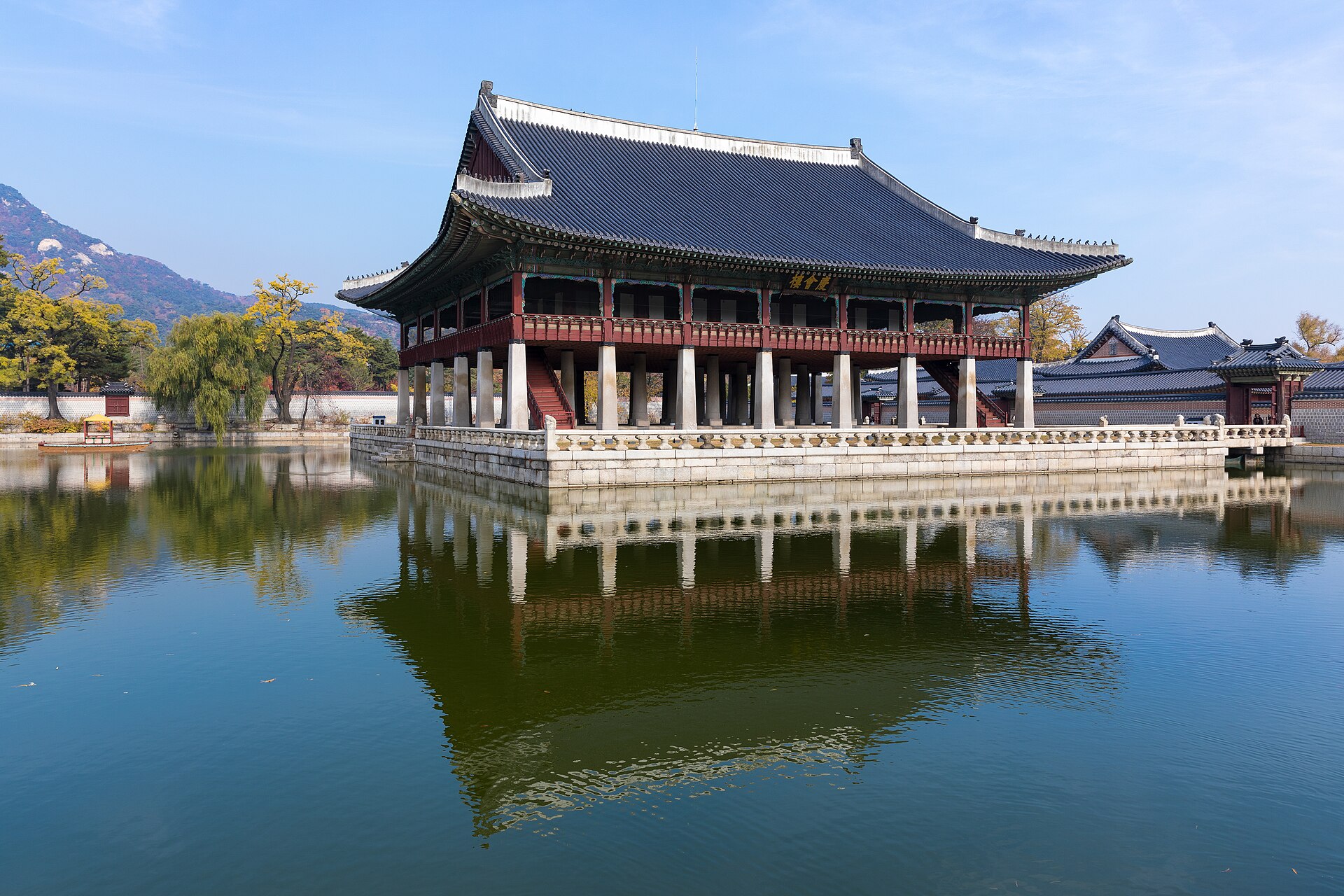
Seoul is one of the fastest cities in the world, and you feel it everywhere, from the internet speed on the metro to the food delivery. At the same time six-hundred-year-old palaces stand in the middle of the city, with mountains behind them. That contradiction is what makes Seoul interesting. Below I have written a four-day route and the practical rules.
The palaces and Bukchon
Gyeongbokgung is the largest palace, and the changing of the guard is performed in front of it. Changdeokgung is on the UNESCO list; the Secret Garden behind it has a separate ticket and is seen only with a guide. Anyone arriving in traditional hanbok dress gets into the palaces free, and renting the outfit is cheap at the shops nearby.
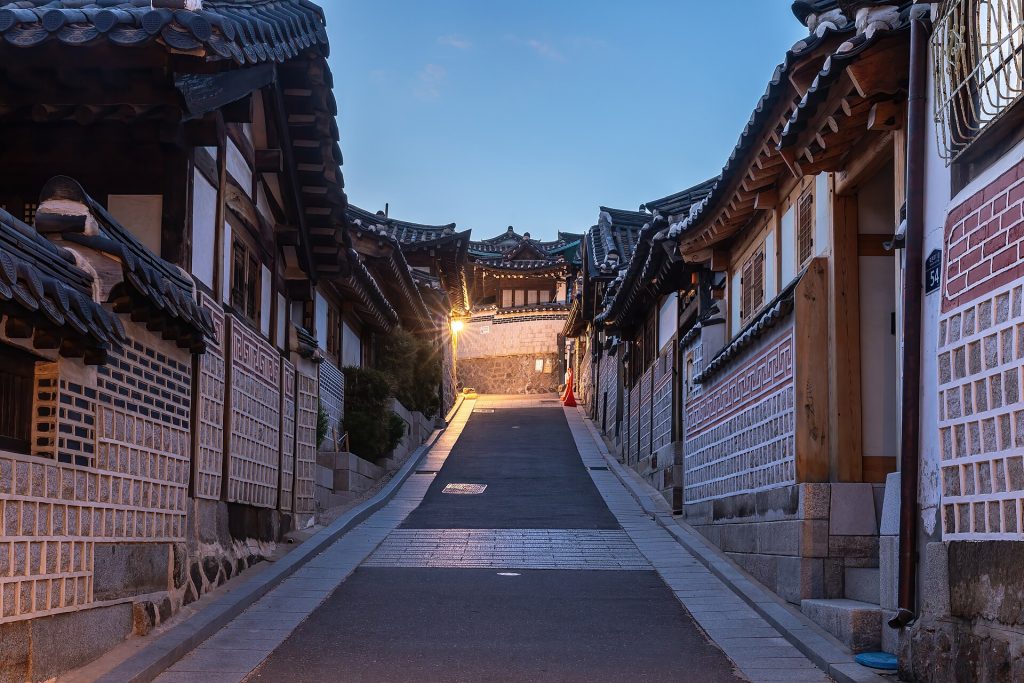
The Bukchon hanok village lies between the palaces, where the old Korean houses have survived. People live there, so you are asked not to make noise, and on some streets visiting hours are limited. Insadong street is close by, with the traditional tea houses and craft shops.
Myeongdong, Gangnam and the night markets
Myeongdong is the centre for cosmetics and street food, and dozens of stalls open there in the evening. Dongdaemun market works until two in the morning and sells fabric and clothing. Gwangjang market is the best of them for eating, and the mung bean pancake called bindaetteok is cooked there.
Gangnam is south of the river and is the modern business district, where prices are higher. Hongdae is the university area, young and cheap, with street performances going on at any hour. Itaewon is the international district, and most of the halal restaurants, along with the central mosque, are there.
The metro, the card and the internet in Seoul
The metro is considered one of the best in the world, has close to twenty lines and announces every station in English. The T-money card works on the metro, the buses and in taxis, and is sold in every shop. The express train from Incheon airport to the centre takes an hour.
Free wireless internet is widespread on the metro and in the streets, but for maps and apps a connection of your own is more comfortable. An eSIM for Korea installs on your phone in a few minutes. One note: Google Maps does not work fully in Korea, and the local map apps are more accurate.
Read more: A South Korea travel guide: Seoul, Busan, Jeju, the T-money card and a K-culture route
Trips out of Seoul
The cable car takes you up Namsan tower and the whole city appears; going in the evening is better. Bukhansan national park is reachable by metro and gives you a half-day walk in the mountains. Tours to the demilitarised zone take you to the border and require registration in advance and a passport.
The high-speed train to Busan is two and a half hours. Taking these tours and ticket packages in advance is essential for the border tour, where places are limited.
Season and prices in Seoul
April–May and September–October are the best months, with 18–25 degrees. The cherry blossom opens at the beginning of April, and the autumn colours come in October. July and August are hot, humid and wet. Winter is dry and cold, dropping below zero.
A hotel is 60–110 euros and lunch in a restaurant 7–12. A hostel bed starts at 20–35 euros, and the choice is wide in the Hongdae district. A palace ticket is a few euros. Official information is on the Visit Seoul site.
In closing
Seoul is a city that fits into four days, with cheap food and excellent transport. Buy a T-money card, put on a hanbok and walk into a palace free, and give one evening to the Gwangjang market. For a visa and a route, fill in the application form.
Note: the prices in this article are those at the time of publication and may change with the exchange rate.
