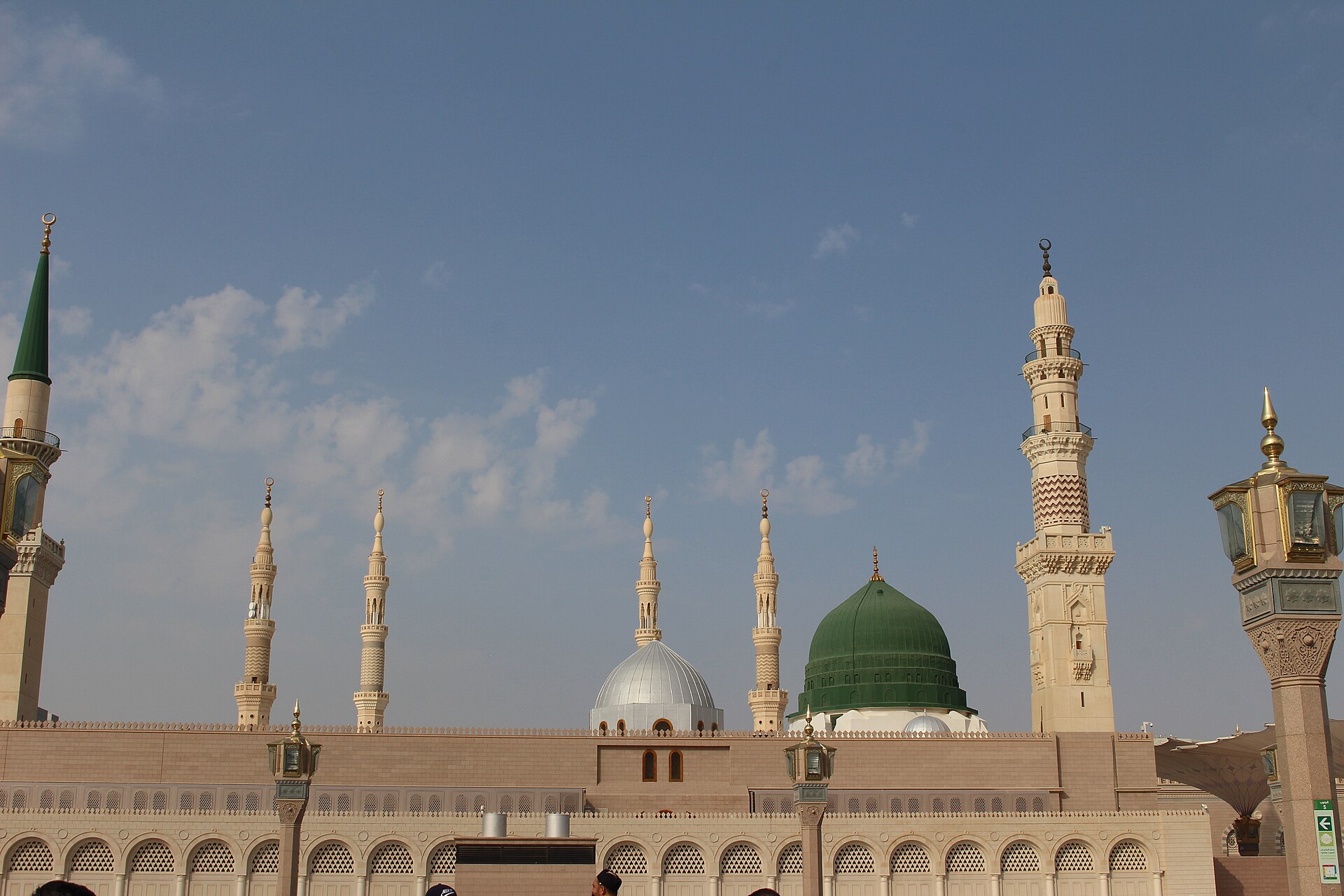
Medina is the second holiest city in Islam and is considerably quieter than Mecca. Most of those coming to visit feel this at once: the tempo here is slower, the distances are short and the city is greener. There is also one difference in the rules that has to be known in advance. Below I have written about the Prophet’s Mosque, the places of visit around it and the questions of organisation.
The entry rule for Medina
Unlike Mecca, non-Muslims can enter the city of Medina itself. But the Prophet’s Mosque and the zone immediately around it are for Muslims only, and this boundary is marked with signs. That is, you can enter the city, but not the central mosque complex.
No separate visa is required for the visit; Saudi Arabia’s tourist electronic visa is enough. Most of those performing Umrah combine the route with Mecca. For entry to the Rawdah section, though, an advance time registration through the official platform is needed.
The Prophet’s Mosque in Medina
The Prophet’s Mosque is one of the largest mosques in the world and in its courtyard there are enormous canopies that open automatically. In the daytime heat they open and the courtyard turns to shade; this is the city’s best-known sight. The green dome is at the centre of the complex.
Entry to the Rawdah section is regulated by timed registration and separate hours are set for women. Those who go without registration are often turned back, so you have to choose a date and sign up in advance. The complex is enormous, and remembering your gate number saves time on the way out.
Quba, Qiblatayn and Uhud
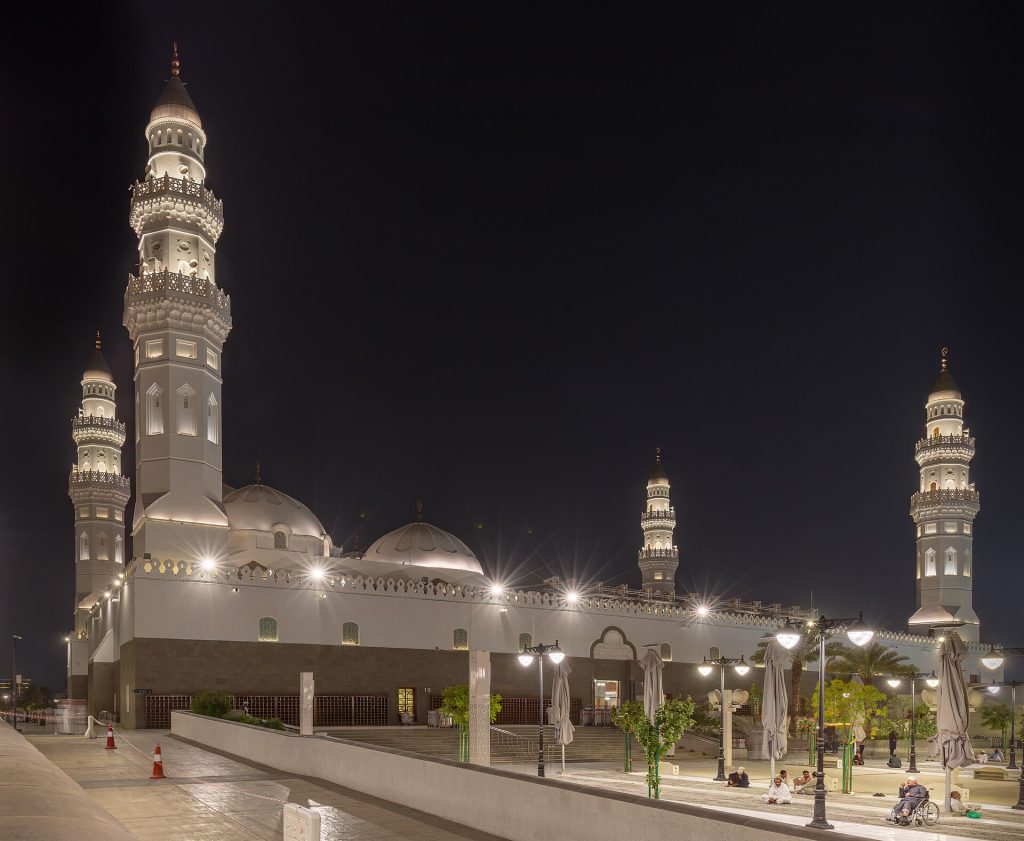
The Quba mosque is the first mosque built in the history of Islam and is three or four kilometres from the city. In recent years the complex has been considerably enlarged. In the morning hours it is quiet.
The Qiblatayn mosque is known as the place where the direction of the qibla changed. Mount Uhud is to the north of the city and the site of visit at its foot is among the most frequented places. The three can be gathered into a day and a half, with taxis or an organised visitors’ bus running between them.
Accommodation and budget in Medina
The hotels are arranged in a ring around the mosque and the price changes sharply with the distance. Staying in the central zone gives a great deal of comfort at prayer times, because it is a few minutes on foot. The city is cheaper than Mecca and the choice of hotels is wider.
| A hotel near the mosque | 80–200 dollars a night |
| A little further out | 40–90 dollars |
| Train from Mecca | The Haramain line, about two hours |
| Rawdah entry | Advance registration required |
The Haramain high-speed train links Mecca, Jeddah and Medina and is far more comfortable than the bus, while the tickets sell quickly in the holiday periods. Because a connection is needed for registration and navigation, buying an eSIM before the trip is practical. Direct flights from Baku to Medina are seasonal, so also compare ticket prices in the Jeddah direction. Official tourism information is on Saudi Arabia’s official tourism portal.
Season in Medina
November–March is the most comfortable period, with 22–28 degrees in the daytime and cool nights. April–October is hot and in the summer months the temperature passes forty, but the dry air is more bearable than in Mecca. In Ramadan and in the weeks after Hajj the city fills up and hotel prices rise. The quietest period is the middle of the winter months.
Conclusion
Medina is the quietest part of the visit and it is worth giving it at least two days. Register in advance for the Rawdah, choose your hotel by distance to the mosque, gather Quba and Uhud into a day and a half, and buy the Haramain train ticket early. If you want to combine Mecca and Medina in one programme, you can look at the ready-made Umrah programmes. For the visa and documents, fill in the application form.
Note: registration rules and the train timetable may change, so check from an official source before travelling.
