Iceland is like another planet. There are black sand beaches, icebergs breaking off a glacier and a hot spring coming out of every hole in the ground; in summer the sun does not set, and in winter the northern lights burn.
For us there are three obstacles. The first is that the visa goes through the Norwegian centre, the second is the long journey, and the third is the prices, where a cup of coffee comes to five euros.
Even so, for someone who goes with a plan Iceland is the most unusual trip of a lifetime, and on top of that everything is seen by car, at your own pace. Below I have gathered the Golden Circle, the south coast and the Ring Road, and the hot springs, the driving rules, the food, the season and the budget.
Iceland in brief
| Capital | Reykjavík; two thirds of the population live here |
| Language | Icelandic; everybody’s English is excellent |
| Currency | Icelandic króna (ISK), 1 euro ≈ 150 krónur; cash is all but unnecessary |
| Visa | Schengen «C» visa, Norway’s VFS centre in Baku, the decision in Ankara |
| Best time | June–August; September–March for the northern lights |
| Flights | 9–11 hours via Copenhagen, Frankfurt or London |
| Daily budget | 250–350 euros at a mid-range level |
Reykjavík, the Golden Circle and the Blue Lagoon
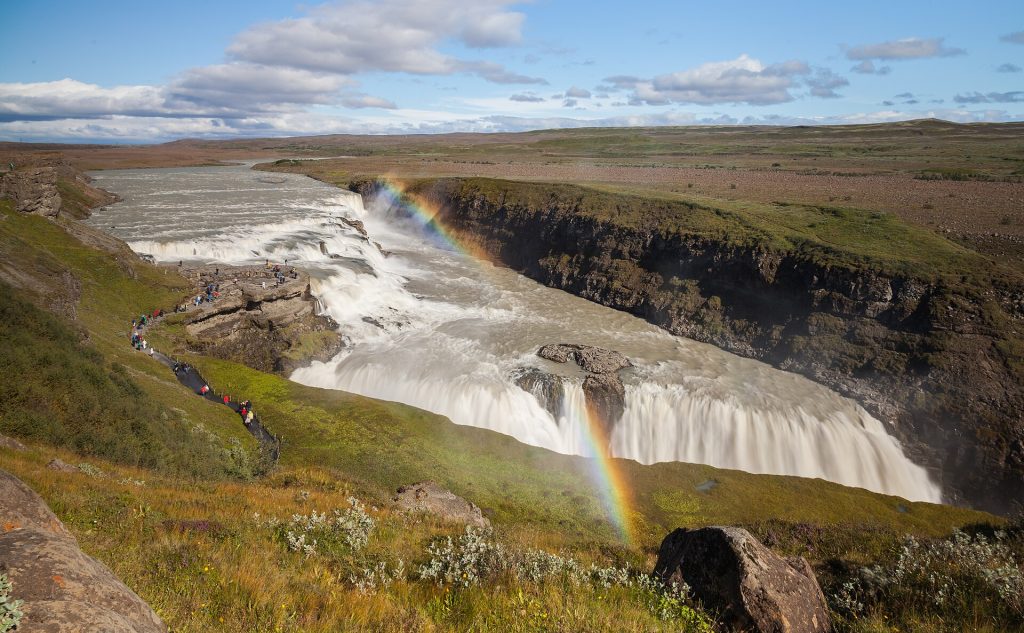
Reykjavík is the northernmost capital in the world and is walked in a day. From the tower of the Hallgrímskirkja church you look down on the city’s coloured roofs. The Harpa concert hall and the Sun Voyager sculpture are on the shore. The whale tours go out from the old harbour. Laugavegur is the main street. The Golden Circle is the classic three-hundred-kilometre day route. In Þingvellir national park you walk in the rift between two tectonic plates, and the world’s first parliament met right here; on the Geysir field Strokkur erupts every five or ten minutes and everyone waits with their phone at the ready, while Gullfoss is a huge two-step waterfall. Along the way there are the Kerið volcanic crater and the Secret Lagoon hot pool.
The Blue Lagoon is a milk-coloured geothermal pool between Keflavík airport and Reykjavík; entry is 70–90 euros, it is booked online weeks ahead, and plan it after or before your flight, as they keep your suitcase. The Sky Lagoon in Reykjavík, with its infinity pool looking out on the ocean, is the modern alternative and the locals prefer it.
Iceland’s south coast and the Ring Road
The south coast is Iceland’s two most magnificent days. You can walk behind the Seljalandsfoss waterfall, while Skógafoss is sixty metres. Hikes are organised on the Sólheimajökull glacier. The black beach of Reynisfjara is known for its basalt columns. The waves there carry someone off every year, so do not go near the water. Then the village of Vík, a boat among the icebergs on the Jökulsárlón glacier lagoon and the Diamond Beach beside it, pieces of ice on the black sand. The Vatnajökull ice caves are open only from November to March.
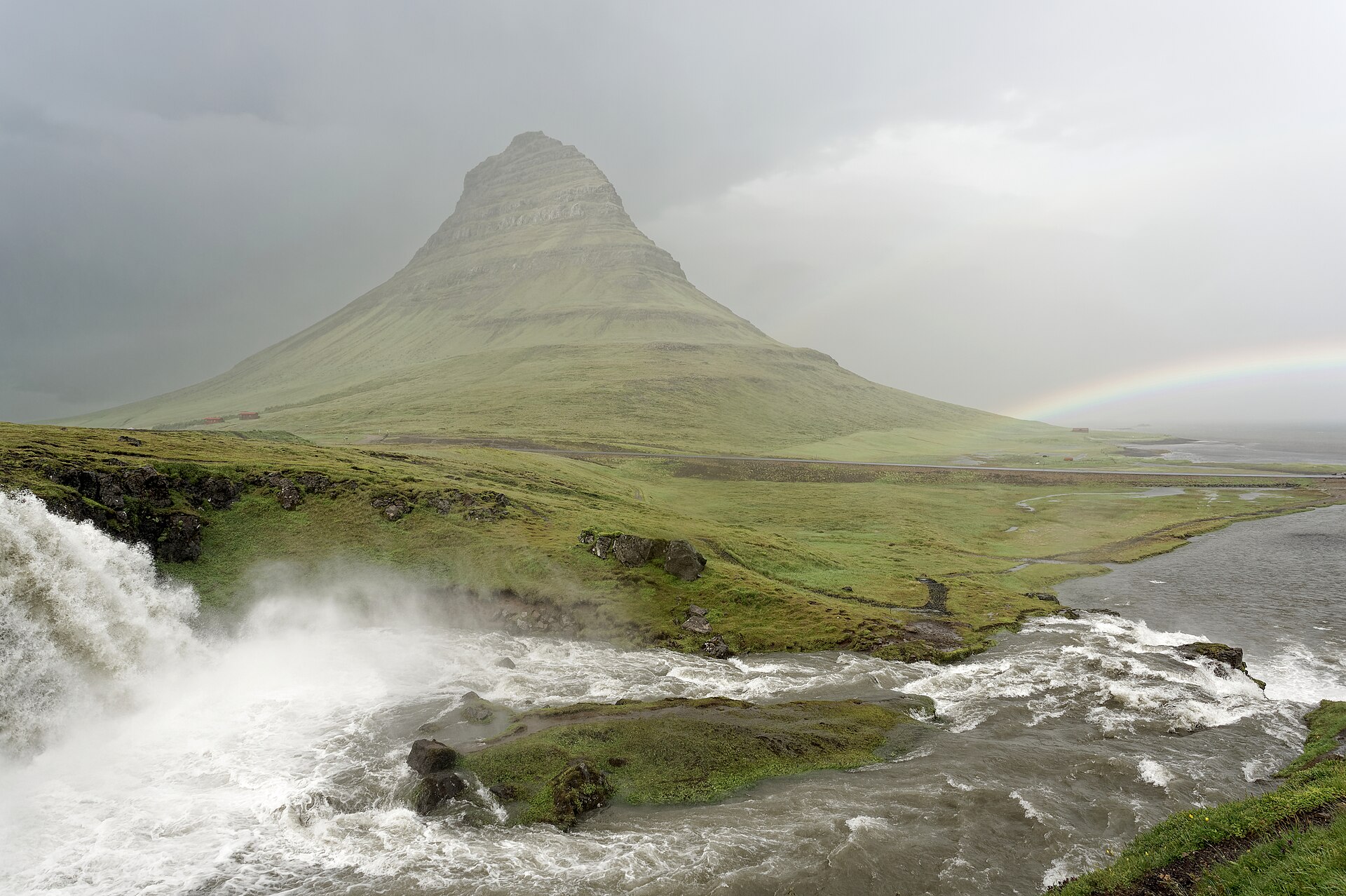
The Ring Road is the 1,300-kilometre Route One that circles the whole island and wants seven to ten days. The eastern fjords are the quietest part of the route. Lake Mývatn has its lava fields and nature baths. Dettifoss is the most powerful waterfall in Europe. In Húsavík you watch whales. Akureyri counts as the capital of the north. If time is short, the Snæfellsnes peninsula is a «little Iceland» in one day from Reykjavík, and Mount Kirkjufell is the most photographed view in the country.
Transport in Iceland: the car is everything
The country has no railway and the intercity buses are infrequent. Day tours out of Reykjavík cost 80–150 euros, but the real Iceland is seen by car.
Hire is 70–120 euros a day in summer, and in winter a 4×4 is required. Pay particular attention to the insurance package: it must cover gravel and sand-and-wind damage. Those two risks damage thousands of hire cars every year, and the person gets the bill after they have gone home.
The F roads lead into the mountainous interior, and you can only go in with a 4×4 and only in July-August. The speed limit is ninety, the cameras write harsh fines, and a litre of fuel is more than two euros.
In winter the roads are icy and windy. Every morning check the weather and road conditions on road.is and vedur.is; the locals do exactly that. From Keflavík airport to Reykjavík the Flybus takes forty-five minutes and costs 30 euros. In winter, going with a tour is wiser for an inexperienced driver.
Food: lamb soup, skyr and Bónus
The traditional cooking is built on kjötsúpa lamb soup, fried fish, harðfiskur dried fish, skyr yoghurt and rye bread.
Reykjavík’s famous hot dog stand Bæjarins Beztu gives you the cheapest lunch in the country at five euros, and you queue up in front of it. Fermented shark, hákarl, is a courage test, and tasting it once is enough.
A main course in a restaurant is 30–45 euros, and a lunch soup with bread 15–20.
The budget is saved by the Bónus and Krónan supermarkets: buying food and cooking in the guest house kitchen is half the price and everyone does it. The tap water is the cleanest in the world, and buying bottled water is simply pointless. Halal food is available in a few Middle Eastern restaurants in Reykjavík, and fish and lamb everywhere. On the road the hot food at the petrol stations is the main stop.
Read next: A visa for Iceland: the Norwegian centre, the decision in Ankara and the 25-day wait
The season: the midnight sun and the northern lights
From June to August it is 10–15 degrees, the sun does not set at night, all the roads are open, and there are the most tourists and the highest prices. May and September are cheap and quiet, and in September the first northern lights appear. From October to March it is the northern lights season, and the best chance is on a cloudless night far from the city, with the forecast on vedur.is. The winter is around zero degrees, but the wind freezes you, the day has four or five hours of light, and the ice caves are open only in these months. The weather changes by the hour, the clothing is layered and waterproof, and take a hat and gloves even in summer. Safety warnings and route information are on the Visit Iceland portal.
Budget and tickets
In Reykjavík a three-star hotel is 180–280 euros and a guest house with a kitchen 120–180, while country guest houses come to 130–200. A hostel bed is 50–70 euros and in Iceland that is the only real way of keeping the budget together.
The programmes are expensive. The Blue Lagoon is 80 euros, a glacier lagoon boat tour 45, an ice cave tour 150–200 and a whale tour 90. Excluding the flight, a week-long trip by car fits into 2,200–3,000 euros per person, and that is the most expensive trip in Europe.
There is no direct flight. Icelandair flies from Copenhagen, London and Frankfurt, and when looking for an air ticket to Reykjavík the most comfortable option is the Copenhagen connection. Iceland tour packages fitting the Golden Circle, the south coast and the northern lights into one week, meanwhile, remove the risk of a winter skid by using a guided coach.
Frequently asked questions about Iceland
How many days does Iceland need?
Five or six days for Reykjavík, the Golden Circle and the south coast. Eight to ten days for the Ring Road.
Is seeing the northern lights guaranteed?
No, it depends on the weather and solar activity. From September to March someone staying at least four or five nights usually sees them, and the tour companies give a free repeat when they are not seen.
Can I drive myself in winter?
A driver with winter and ice experience can do the south coast with a 4×4. The Ring Road and the north in winter are only for experienced drivers, and for everyone else a tour is advised.
In closing
Iceland is an expensive and distant country that demands a fight with the weather, but it has no equal in the world. With the car, the season and the supermarket rule the budget can be managed. The visa process is explained on the Iceland page, and to build the Ring Road or the northern lights plan together, fill in the application form.
Note: the prices here are as of the publication date and can change with the season.
