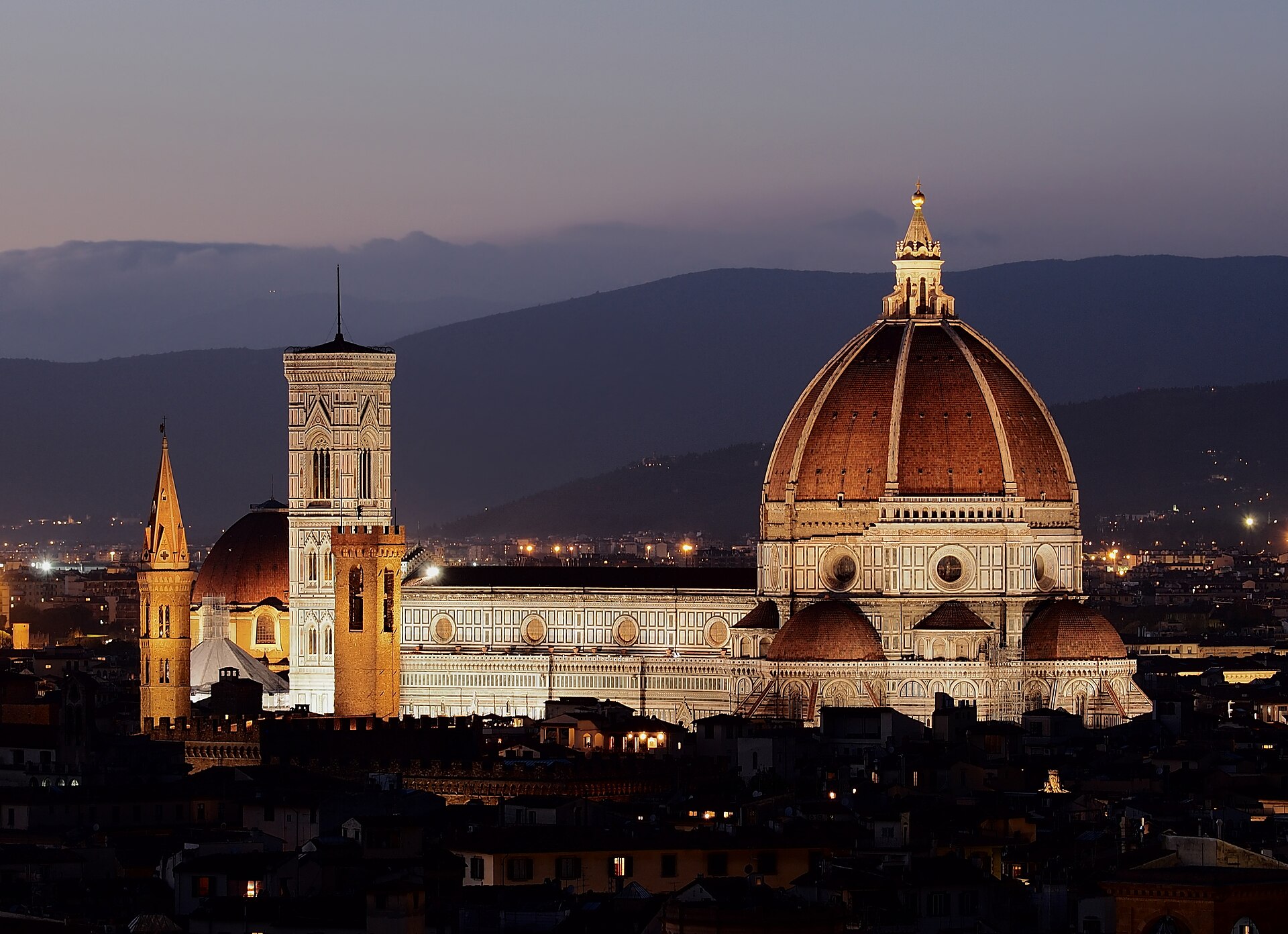
Florence is not a city of museums; the city itself is the museum. The Renaissance began right here and was financed with Medici money. The centre is very small and you can walk from one end to the other in twenty minutes. That is why two days are enough, and it is better to give a third day to the Tuscan hills. If you are planning it together with Rome and Venice, ready-made tour programmes save time.
The Duomo and the dome
When Brunelleschi’s dome was built it was the largest in the world, and it is still counted as the largest brick-built dome. You climb up by four hundred and sixty-three steps; there is no lift and there are narrow passages. The ticket is timed and sells out several days ahead. Entry to the cathedral is free, while the dome, the campanile and the baptistery are covered by a single combined ticket.
Giotto’s bell tower is a little lower than the dome, but in exchange the dome itself is in your frame. Choose one of them to climb; both in one day is too much.
The Uffizi, the Accademia and Ponte Vecchio
The Uffizi gallery is the Medici collection, and Botticelli’s «Birth of Venus» is kept there. In the Accademia gallery stands Michelangelo’s David, and its real size is considerably bigger than the photographs suggest. Tickets for both are timed, and in summer they run out days in advance.
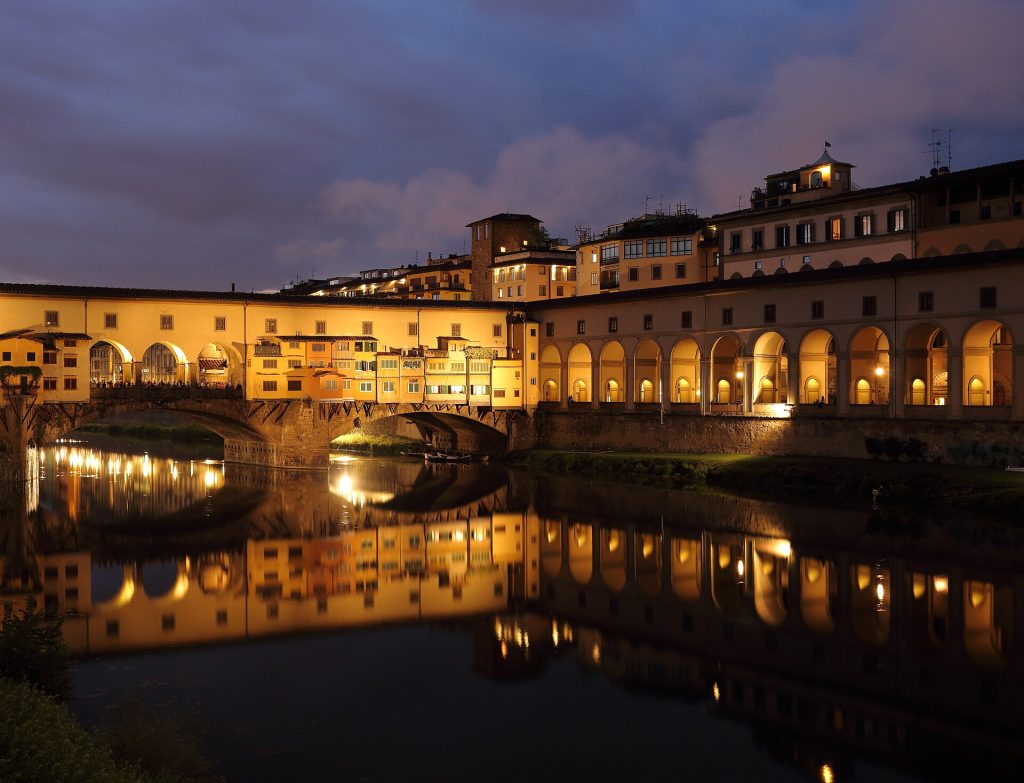
Ponte Vecchio is the only remaining bridge with shops on it; butchers once sat there and now there are jewellers. The hidden Vasari corridor running above it is the passage the Medici had built to walk from the palace to the gallery. Taking the museum tickets in advance is not merely a convenience in Florence, it is a condition.
Views and food in Florence
Climb up to Piazzale Michelangelo from the other side of the river; the whole city fits into one frame and sunset is at its best there. The Boboli gardens are behind the Pitti palace and are useful for shade in summer. The Oltrarno quarter is away from the tourists, and the artisan workshops are there.
Tuscan cooking is simple and built on olive oil and bread. The vegetable soup called ribollita is the winter classic. There is a food hall on the first floor of the central market and the prices are lower than in a restaurant. Stay away from places whose menu has pictures on it.
Read more: An Italy travel guide: Rome, Florence, Venice, Amalfi and the classic route by high-speed train
A day in the Tuscan hills
Siena is an hour and a half by train and its square is among the most beautiful in Italy. San Gimignano is known for its towers and is reached by bus. Public transport works poorly to the Chianti region, so an organised tour or a transfer booked in advance is more practical. The train to Pisa is an hour and half a day is enough there.
Season and budget in Florence
April–May and September–October are the ideal months, at 20–26 degrees. July and August climb to 35 degrees and the city becomes very crowded. Winter is cool and rainy, but in exchange there is virtually no queue at the museums. January and February are the cheapest period.
A three-star hotel in the centre is 110–170 euros, and 90–140 on the Oltrarno side. The Uffizi is 25 euros, the Accademia 16, and the combined dome ticket 30. Compare high-speed train tickets to Rome and Venice on one screen. Official information is on the Feel Florence site.
In short
Because Florence is small it fits into two days, but anyone who arrives without tickets goes home without seeing the main places. Buy the Uffizi and Accademia tickets now, spend sunset at Piazzale Michelangelo, and give one day to Tuscany. For a visa and a route, fill in the application form.
Note: the prices in this article are those at the time of publication and may change with the season.
