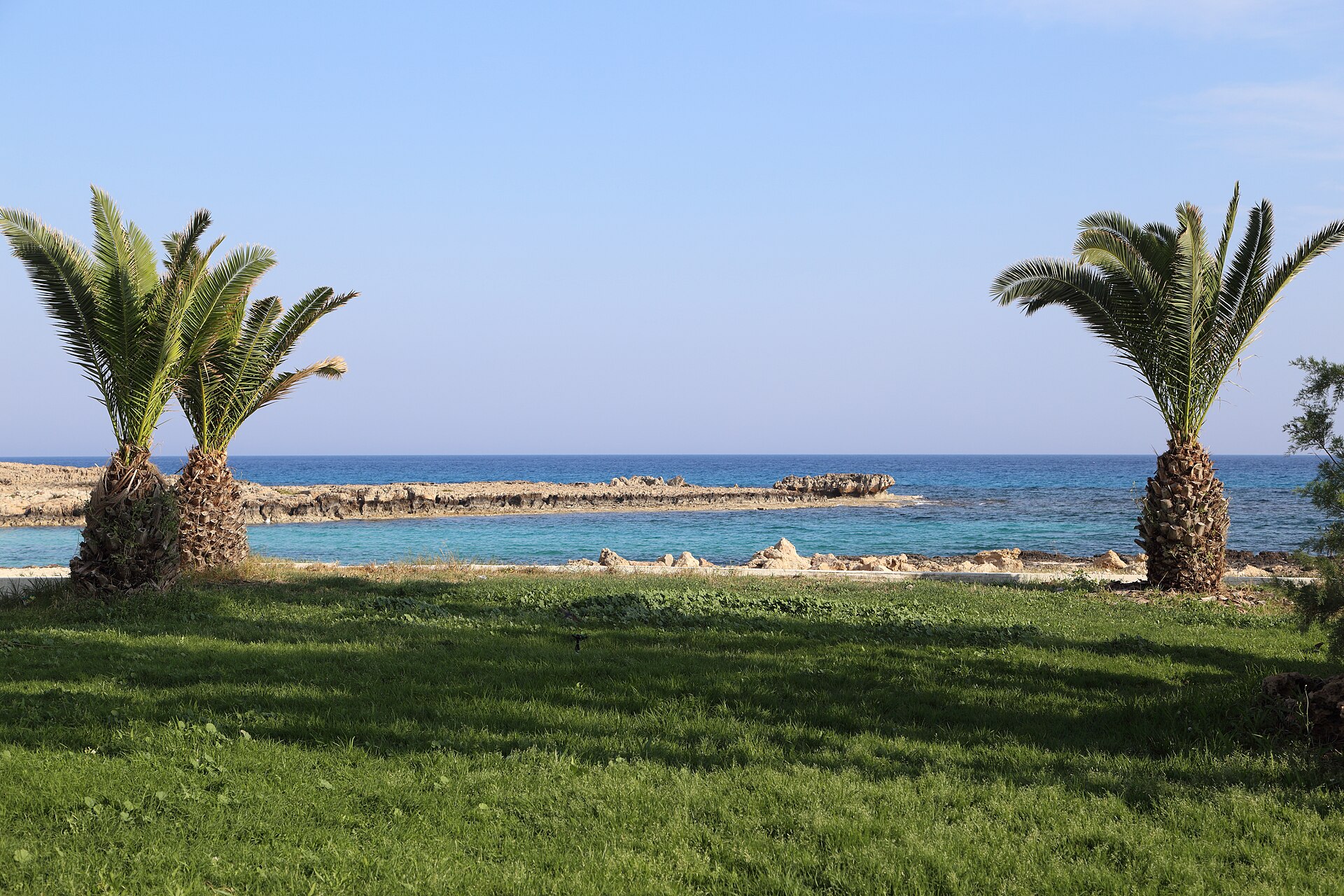
Cyprus is the third largest island in the Mediterranean and for us it works, in effect, as two separate countries. In the south lies the Republic of Cyprus, a member of the European Union, and Larnaca, Limassol, Paphos and Ayia Napa are on that side. In the north is Northern Cyprus, recognised only by Türkiye, reached visa-free via Istanbul, with Kyrenia and Famagusta.
This article is about the southern half of the island. That side requires a visa, and in exchange it gives beaches, history and mountain villages all in one; I explain the north’s difference separately below. The cities, the beaches, the Troodos mountains, the driving rules, the food, the season and the budget are here too.
Cyprus in brief
| Capital | Nicosia, the world’s last divided capital |
| Language | Greek; English everywhere, Russian widely in Limassol |
| Currency | Euro; Turkish lira in Northern Cyprus |
| Visa | A Republic of Cyprus visa; the rules are in our visa article |
| Best time | May–June and September–October; the sea stays warm into November |
| Flights | 6–8 hours to Larnaca via Athens, Vienna or Warsaw |
| Daily budget | 100–140 euros at a mid-range level |
Cypriot cities: Larnaca, Limassol, Paphos, Nicosia
Larnaca is the gateway. The island is generally toured by car, but ordering a transfer in advance from the airport to the hotel saves a lot of time on night arrivals. The palm-lined Finikoudes promenade and the church of St Lazarus are in the centre, while on the shore of the Salt Lake stands the Hala Sultan Tekke mosque, where flamingos come in winter. A day is enough for the city.
Limassol is the largest coastal city. The modern marina, the old town and the castle are here, the island’s best restaurants are in this city, and a large Russian-speaking community lives here. The ancient theatre of Kourion nearby looks straight out to sea.
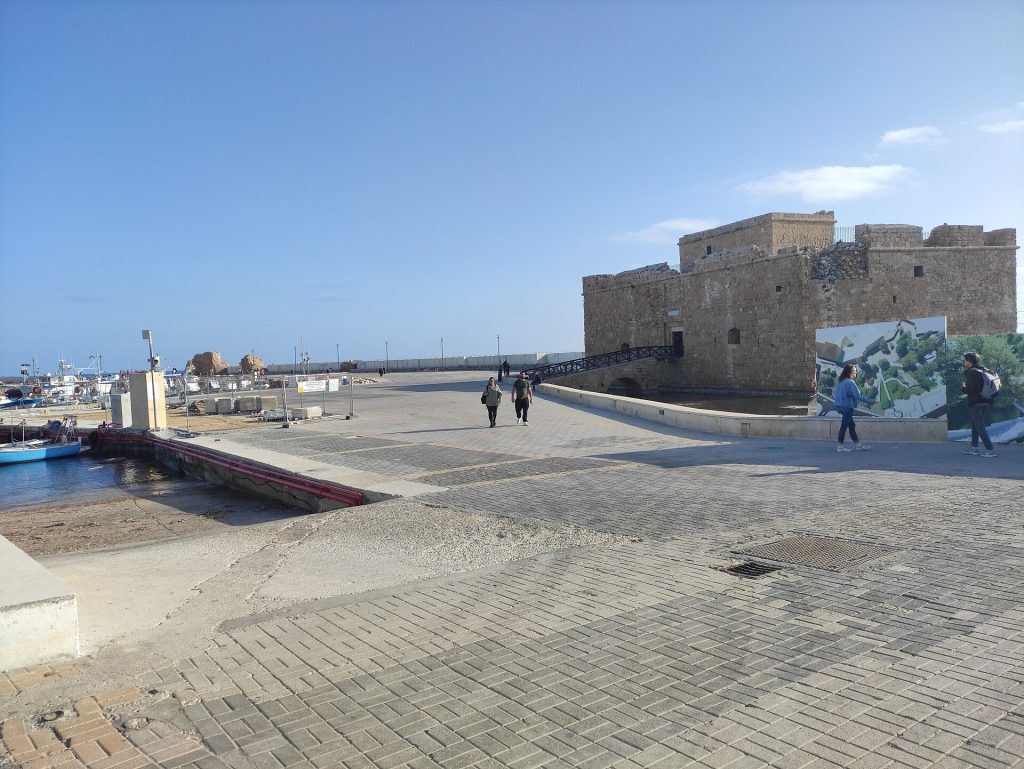
Paphos is on the UNESCO list. The archaeological park has Roman mosaics, with the Tombs of the Kings and the harbour castle nearby. Twenty-five minutes from the city stands Aphrodite’s Rock, Petra tou Romiou, the island’s most famous view. On the Akamas peninsula there is a boat trip to the Blue Lagoon and the Lara turtle beach.
Nicosia is a capital cut in two by a wire fence, and it makes you think. There is a pedestrian crossing point on Ledra street and you cross to the northern side with your passport; the Venetian walls and the Büyük Han caravanserai are on the two sides. Everywhere on the island is one or two hours away by car, so you can stay in one base and see it all.
Cypriot beaches and the Troodos mountains
Ayia Napa is the main resort town in the east. Nissi beach means white sand and shallow turquoise water, while Makronissos is for families. Cape Greco has sea caves and a Blue Lagoon. The nightlife is built for the young. Protaras is next door and quieter, and Fig Tree Bay is a family beach. The beaches of Limassol and Paphos are pebble and sand, Coral Bay is Paphos’s best, and Lara Bay is wild and full of turtle nests.
The Troodos mountains are in the centre of the island. Mount Olympus is one thousand nine hundred and fifty-two metres, and in winter there is a two-month ski season up there. In summer the mountain stays ten degrees cooler, and when it is thirty-eight on the coast people escape there.
The villages of Omodos, Kakopetria and Lefkara make a day’s outing with their stone streets, lace and wine. Kykkos is the island’s richest monastery, and the region has ten wooden-roofed churches on the UNESCO list. The Caledonia waterfall trail is the coolest place in summer.
Getting around Cyprus: driving on the left and the car
Cyprus is toured by car. Public transport is limited to intercity buses: Larnaca to Ayia Napa and Limassol takes an hour and costs 4–5 euros, and they do not reach the villages at all.
Hire is 25–45 euros a day. Traffic is on the left — a British legacy — and the cars are right-hand drive. Because hire cars have red number plates, local drivers are patient with you; everyone knows you are a tourist.
The motorways are free and good, parking in the cities is paid, and an Azerbaijani licence is accepted. Bolt taxis work in Larnaca, Limassol and Nicosia, while intercity taxis are expensive: Larnaca to Ayia Napa costs fifty euros. The bus from the airport to Larnaca town is two euros and the Kapnos bus to Ayia Napa nine. Crossing north by car is possible only with local insurance, and the hire company has to allow it.
Halloumi, meze and the Cypriot kitchen
Halloumi grilled over coals is the island’s symbol. Meze is a feast of fifteen to twenty small plates, in a meat or a fish version. It is 20–25 euros per person. One order is enough for two — you cannot eat the rest anyway. Souvlaki and sheftalia kebab are on every menu. Kleftiko is slow-cooked lamb, and kolokasi is a local root vegetable. In the villages of Lefkara and Omodos they serve home cooking. Commandaria is the world’s oldest named sweet wine. It is all very close to our palate, a mixture of Turkish and Greek cooking.
As for halal, Cypriot cooking includes pork. Even so, chicken and lamb souvlaki, fish and vegetable meze are found everywhere. Lebanese and Turkish restaurants in Larnaca and Limassol are halal, and the northern side of Nicosia is entirely halal.
Lunch in a restaurant is 12–18 euros and dinner 25–40. A taverna outside the tourist zone works at half the price. The tap water is drinkable but the taste is poor.
Season and the Northern Cyprus difference
April–June and September–October are the ideal months at 24–30 degrees. The sea stays above twenty degrees from May to November, which makes Cyprus’s beach season the longest in Europe.
In July and August the temperature climbs to 35–40 degrees, humidity rises on the coast, and Ayia Napa is at its busiest and most expensive. In winter it is 15–18 degrees and sunny, snow falls in Troodos, and Paphos and Limassol count among the warmest places in Europe for a winter break.
It matters to know the Northern Cyprus difference. Kyrenia’s harbour and castle are the north’s most famous sight. The walled city of Famagusta and the ancient city of Salamis are there too. The Karpaz peninsula has wild beaches. For us the north is visa-free: you fly via Istanbul to Ercan airport. Crossing from north to south is possible with a Republic of Cyprus visa, while in the other direction entering from the north counts as illegal entry under the southern side’s law — anyone wanting to combine the two halves in one trip should read our visa article. Beach and event information is on the Visit Cyprus portal.
Budget and tickets
In Larnaca a three-star hotel is 70–110 euros, in Ayia Napa 120–200 in summer and in Paphos 80–130, while Troodos village houses come to 60–90.
Entry tickets are cheap. The Paphos archaeological park and Kourion are four and a half euros, and the Blue Lagoon boat trip 25. Excluding the flight, a week-long trip fits into 800–1200 euros.
There is no direct flight to the south. Tickets to Larnaca are found via Athens, Vienna and Warsaw, while the Istanbul connection serves only Ercan airport in the north. Cyprus tour packages fitting Ayia Napa, Paphos and Troodos into one week settle the car and hotel bookings together.
Frequently asked questions about Cyprus
How many days does Cyprus need?
Five days with one beach base, seven or eight with Paphos, Troodos and Nicosia. The island is fully toured in a week.
Ayia Napa or Paphos?
Ayia Napa is the best sandy beaches and a young crowd; Protaras is for families. Paphos is history, quiet and a winter break, and Limassol restaurants and city life.
Which beach with children?
Fig Tree Bay in Protaras and Makronissos in Ayia Napa are shallow and sandy, and Coral Bay in Paphos. The water parks are in Ayia Napa and Limassol.
In closing
With a long beach season, a kitchen close to ours and its compact size, Cyprus is one of the easiest islands in the Mediterranean, and once the visa question and the north–south difference are settled in advance the trip is simple. The visa options are explained on the Cyprus page, and to build the beach and mountain route together, fill in the application form.
Note: the prices here are as of the publication date and can change with the season.
