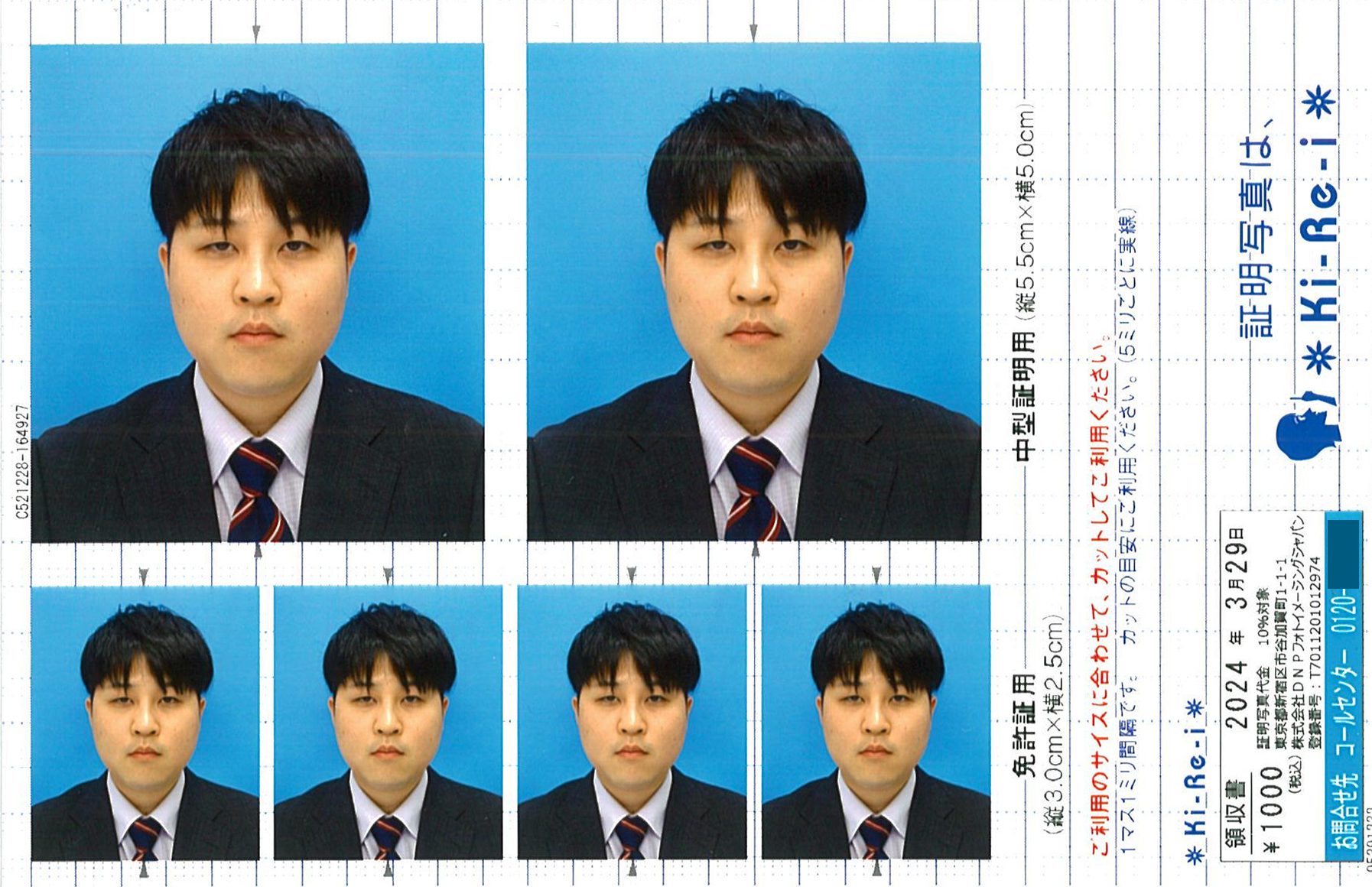
The visa photo is the cheapest part of a document package and the part sent back most often. A person gathers all the documents over weeks and then at the window the photo is returned, because the background came out slightly grey or the hair covers an eyebrow. Yet the requirements are set by an international standard and reading them once is enough. Below I have written those requirements.
Technical requirements for a visa photo
| Size | 35 by 45 mm for Schengen, 51 by 51 mm for the United States |
| Background | White or very light grey, completely plain, without shadow |
| Height of the face | 70–80 per cent of the photo |
| Age | Taken within the last 6 months |
| Expression | Neutral, mouth closed, eyes open |
| Quality | Colour, matt paper, not edited on a computer |
The size varies by country and this is where mistakes are made most. For an American visa a square photo is needed, and for Schengen a rectangular one. When you go to the studio, be sure to say which country it is for.
What is forbidden in a visa photo
Glasses are now accepted in almost no country, even with clear lenses. Headwear is allowed only for religious reasons, and even then the face must be fully visible, with nothing covered from the forehead to the chin.
The hair must not cover an eye or an eyebrow. Smiling, tilting the head, a shadow falling and the red-eye effect are not accepted. A uniform or a white shirt is not recommended either, because it dissolves into the white background; darker clothing is better.
Photos of children and babies
The same rules apply for a child, but there are a few concessions. In photographs of babies the requirement for a neutral expression is relaxed, while the eyes still have to be open. A parent’s hand or a toy must not be visible in the photo.
The simplest method is to lay the baby on a white mattress and shoot from above; the background then comes out plain naturally. All the same, having it taken in a professional studio is more reliable, because they crop the size to fit the system.
Read more: A visa for the United Kingdom: 135 pounds, 3 weeks and the process where the documents speak for you
Digital photo requirements
In online applications the photo is uploaded as a file and there are separate requirements there. Usually the file size has to be within a few hundred kilobytes and the format JPEG. The pixel size is specified too, six hundred pixels square for example.
Photographing a printed picture with a phone and uploading it is almost always refused, because the edges and the light are distorted. Ask the studio for the digital copy as well; they usually give it free. The official photo standards for Schengen are set out on the European Commission site.
In one sentence
The visa photo is a cheap document, but when it is wrong it holds up the whole package. Confirm the size for the country, take the glasses off, get the digital copy too. To check the documents together, fill in the application form.
Note: photo standards differ by country, so check the official requirement before going to the studio.
